
Knee replacement surgery means a long recovery, although it’s an acceptable alternative to chronic pain and limited mobility. If you’re not ready to go through major surgery and the risks involved, you may want to learn how to avoid total knee replacement. Leading knee pain doctors in Brooklyn and the Bronx offer innovative treatments that help many people find a way to avoid total knee replacement. Call the Astra Knee Pain Center to find out about genicular artery embolization (GAE).
Why Would I Need a Total Knee Replacement?
Living with chronic knee pain is an isolating burden that can take a significant toll on your quality of life. Whether it’s due to a flare up of an old injury, or simply the natural aging and degeneration of cartilage, immobility of the knee can be frustrating and painful.
Knee replacement surgery may be recommended, but before you go under the knife, learn about available non-surgical treatments. Find a knee pain doctor like Dr. George Bolotin and his team of experts at the Astra Knee Pain Center. They offer options on how to avoid total knee replacement, including advanced, non-surgical treatments that can get you back to your normal activities.
What Are My Alternatives to Total Knee Replacement?
Alternatives to total knee replacement often begin by obtaining a second opinion for knee surgery from Dr. Bolotin, a leading knee pain doctor in Brooklyn, if your current physician insists on surgery.
Our GAE specialists at the Astra Knee Pain Center collect further information on your eligibility for alternative treatments such as genicular artery embolization (GAE). GAE vs. knee replacement is ideal if you’re a good candidate for the procedure.
It’s also effective in place of other alternatives, such as:
- Platelet-rich plasma and stem cell injections
- Steroid injections
- Physical therapy
- TENS and other devices
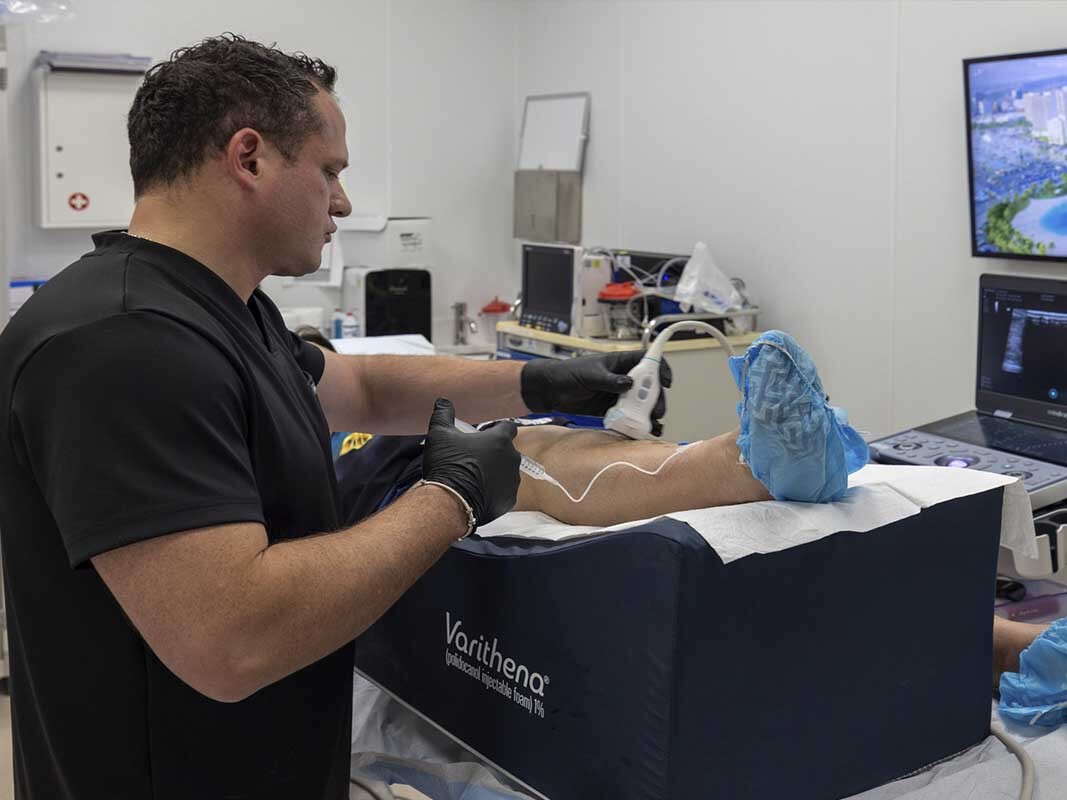
Am I a Candidate for GAE by a Knee Pain Doctor?
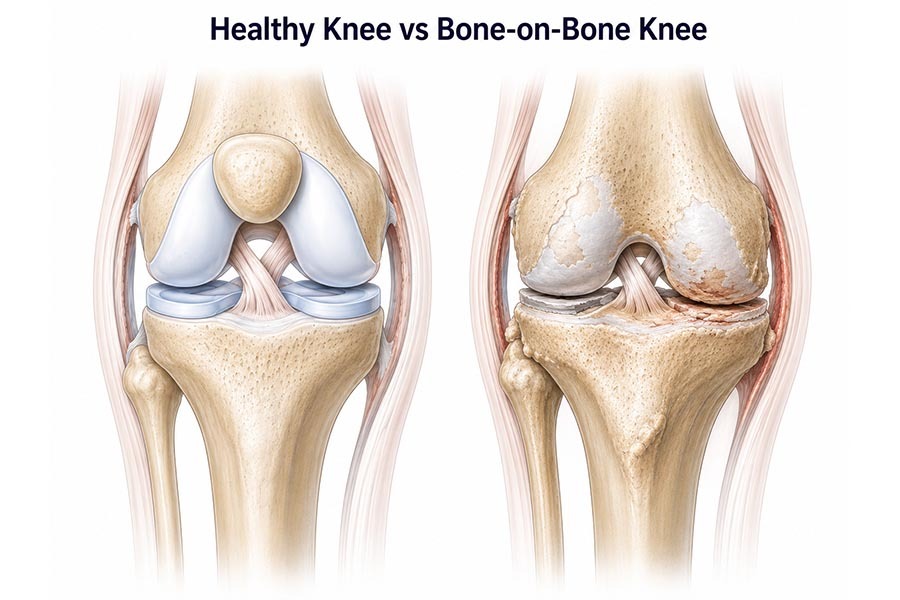
Knee pain doctors know that bone-on-bone grinding in your knee is a sign of advanced osteoarthritis. But before you opt for total knee replacement, get a second opinion at the Astra Knee Pain Center. Our expert knee pain specialists find the root causes of your pain and offer non-surgical treatments to relieve your pain, potentially letting you delay surgery. Call today for relief.
What Happens Inside My Joint During Bone-on-Bone Grinding?
Bone-on-bone grinding occurs when the smooth cartilage that protects your knee joint wears away. Cartilage is the shock absorber inside your knee. It allows smooth motion by reducing friction between the bones. Without this protective layer, your bones grind against each other, leading to swelling, pain and mobility challenges.
Other factors that contribute to knee grinding include:
- Synovial fluid changes.The lubricant in your knee joint loses viscosity, increasing joint stiffness.
- Muscle fatigue.Your muscles tire faster, as they have to work to support your unstable knee.
- Altered gait.You may unconsciously change the way you walk, adding stress to your knee and other joints.
- Ligament strain.Like your muscles, you stress your ligaments, leading to possible pain or injury.
- Cartilage debris.Small pieces of the cartilage detach to float in your knee joint, causing irritation or even locking.
The Astra Knee Pain Center, with offices in Brooklyn and the Bronx, offers advanced, non-surgical treatments like genicular artery embolization (GAE) to manage the pain of bone-on-bone grinding. These knee pain doctors in Brooklyn and the Bronx use GAE to reduce inflammation in your knee and enhance joint movement.
What Causes Knee Pain in Brooklyn and the Bronx That Leads to Grinding?
Osteoarthritis is the most common medical condition that causes knee grinding.
Other knee pain causes include:
- A meniscus tear
- Patellofemoral syndrome
- Chondromalacia patella
- Repetitive high-impact activities
- Improper movement patterns over time
Previous injuries, such as ligament tears or meniscus damage, speed up cartilage wear, triggering knee grinding. Genetics also play a role; if someone in your family has arthritis, you’re at risk of getting it too. Noticing knee pain symptoms early alerts your knee pain specialist in Brooklyn or the Bronx to take preventative action.
Other contributing factors include:
- Aging and degeneration. Natural wear and tear thins your cartilage over time.
- Post-traumatic arthritis. Past injuries may increase bone friction.
- Inflammation and joint damage. Chronic inflammation damages your cartilage, limiting your mobility.
- The extra weight puts pressure on your knees, increasing the cartilage wear and tear.
What Symptoms Suggest That Knee Grinding Is Causing Your Knee Pain?
You may notice grinding or popping sensations when you bend or walk, indicating a loss of cartilage in your knee. You may feel discomfort climbing stairs, and the pain may continue even when you rest. These symptoms point to a joint under stress that requires medical attention to avoid more damage.
Other common symptoms of knee grinding include:
- Swelling and tenderness.Your knee becomes swollen and warm.
- You can’t bend or straighten your leg without pain.
- Instability or locking.Your knee feels unstable or it locks up on you.
Visit a doctor at the first sign of trouble to protect your cartilage and reduce inflammation. Keeping track of your symptoms reflects how well your treatment is working. If you’re suffering knee pain in Brooklyn and the Bronx, trust Dr. Bolotin to find the appropriate treatment for you, perhaps including GAE.
How Does GAE Help Relieve Knee Grinding?
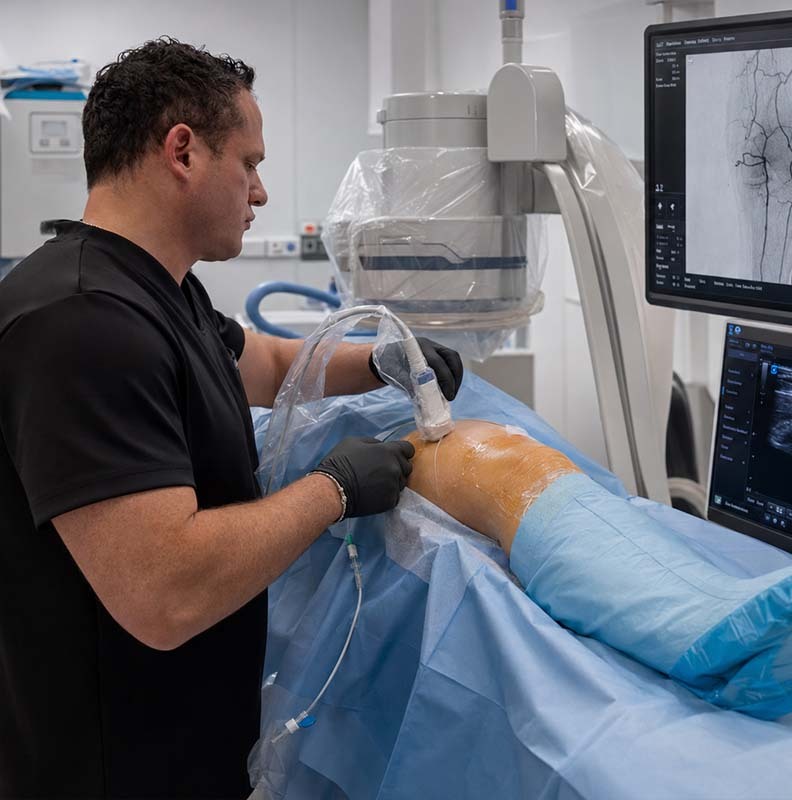
If you’re experiencing knee pain, visit the Astra Knee Pain Center for a solution that targets the root cause of your joint discomfort. GAE targets the abnormal blood flow to inflamed knee tissues, lowering the pressure to ease stiffness and speed recovery without surgery. Your ligaments, cartilage and surrounding muscles can then function more efficiently.
The benefits you can expect from GAE include:
- It’s a minimally invasive procedure.
- It provides a long-lasting reduction of swelling and discomfort.
- It complements other non-surgical treatments, such as physical therapy.
- It allows you to walk, climb stairs and perform everyday tasks without pain.
Your knee pain doctor in Brooklyn and in the Bronx decides if GAE is right for you after an examination and imaging tests. Your physician then creates a treatment plan tailored to your needs. If you qualify for GAE, you can get the procedure. Otherwise, your doctor protects your safety by recommending another procedure.
What Lifestyle Changes Reduce Knee Grinding and Improve My Mobility?
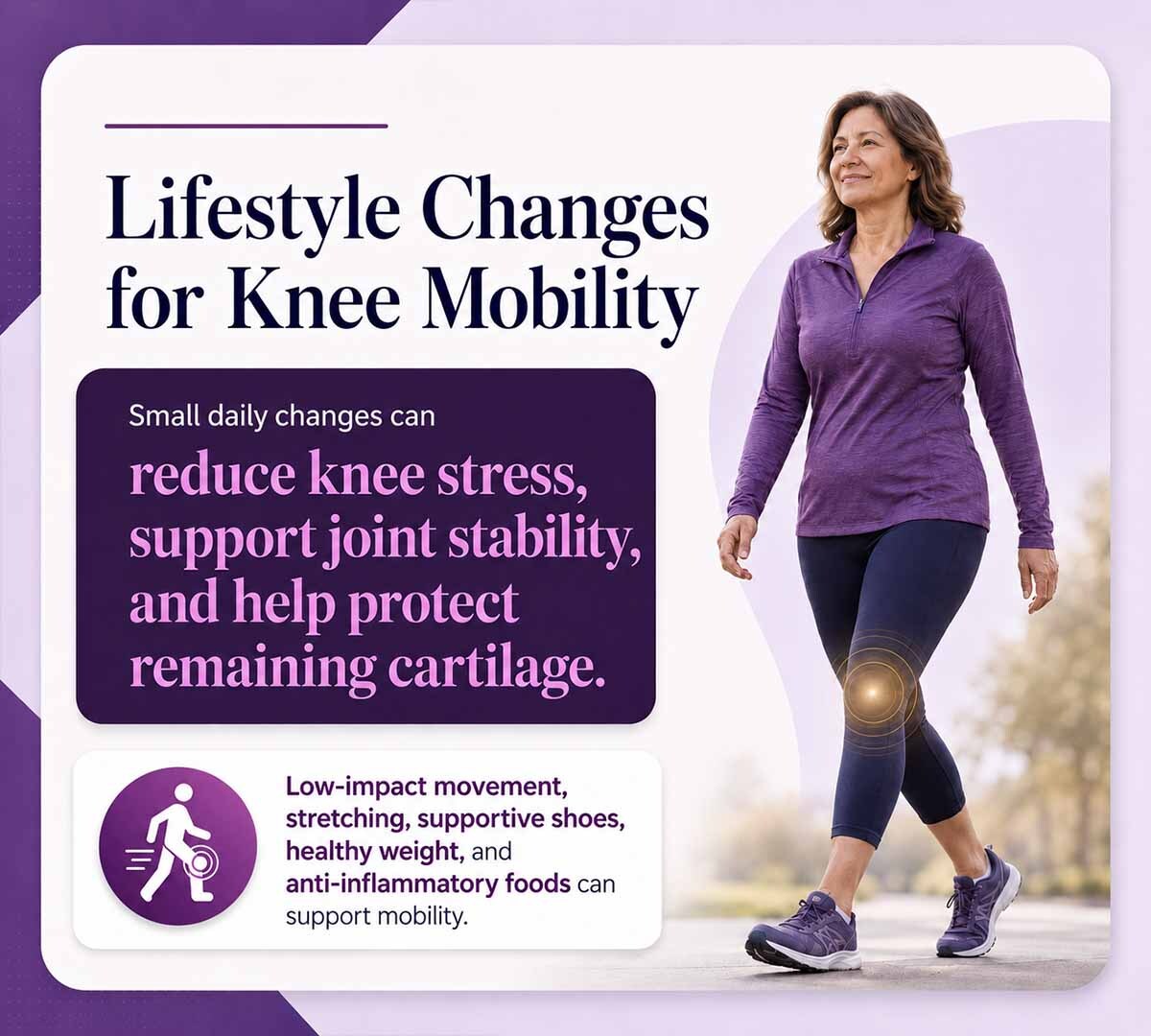
Maintaining a healthy weight reduces stress on your knees and slows cartilage wear, helping preserve your joint function. You can also try a low-impact exercise, like swimming, cycling or walking. These exercises strengthen the muscles around your knees. Stronger muscles support joint stability and reduce your knee grinding.
Other helpful lifestyle adjustments include:
- Strengthening your muscles
- Stretching regularly
- Avoiding high-impact activities
- Wearing proper shoes
- Eating anti-inflammatory foods
- Protecting your joints whenever possible
Participate fully in life with healthy knees by following these tips and by getting expert care at the Astra Knee Pain Center whenever you start experiencing consistent knee pain. Schedule a consultation to have your knee pain thoroughly evaluated. These doctors use the latest tolls to reach an accurate diagnosis so they can recommend the safest, most appropriate and most effective non-surgical knee pain solutions. Contact the Astra Knee Pain Center to take the first step toward relief from your knee pain.
Overall health, activity level and weight are contributing factors when your Brooklyn knee pain doctor determines whether GAE is the right solution for your knee pain condition.
In addition to your health considerations, you may be a good candidate if you have any other symptoms or conditions, such as:
- Suffering with knee osteoarthritis. Inflammation caused by aging, degeneration or flare-ups of old injuries are contributors to pain that keeps you from daily activities.
- Having failed conservative treatments. GAE may be a solution when physical therapy, pain medications or steroidal injections didn’t work.
- Looking for a non-surgical solution. Surgery can be invasive and expensive, putting you at higher risk of infection and requiring a longer recovery period.
When looking for how to avoid total knee replacement, you may have bone and joint damage that’s too severe for an embolization to fix. Dr. Bolotin, a top tier knee pain doctor in the Bronx considers all the alternatives, including when you shouldn’t get GAE.
What Are the Benefits of Finding Out How to Avoid Total Knee Replacement?
When you’re in daily pain, suffering from swelling and stiffness or bone-on-bone grinding, the last thing you want is to add to it. Total knee replacement may keep you from returning to normal activities for longer than you’d like, and in fact may limit your ability to participate in high-intensity activities at all.
Knee pain doctors at Astra Knee Pain Center utilize newer and less invasive alternatives to total knee replacement. Undergoing GAE may prove to be a practical treatment of joint pain, without a lengthy, painful recovery period.
Other benefits of the non-surgical treatment include:
- Minimal side effects. Side effects normally consist of temporary swelling and tenderness that subside within a few days.
- Lower risk of complications. Targeting and treating the individual nerve is a straightforward solution that’s much less complicated than replacing the joint. With replacement surgery, there’s a much higher risk of infection and blood clots.
- Short-term recovery period. The GAE recovery timeline lasts on average a few weeks, whereas a total knee replacement could take six months to a year to heal.
- Lowered cost. Non-surgical treatment such as GAE is significantly cheaper than a surgical replacement with no overnight stays in a hospital.
How Can I Avoid Total Knee Replacement?
The most important step when you’re looking for how to avoid total knee replacement is to visit your knee pain doctor at the first sign of pain. It’s always easier with better outcomes when knee pain is tackled sooner rather than later.
Your knee pain specialists identify the cause of your pain and plan a course of treatment to suit your needs. Contact the best knee pain specialists in Brooklyn and the Bronx at the Astra Knee Pain Center, to learn how to avoid total knee replacement alternative. See if GAE is right for you.
Updated on Jul 6, 2026 by Dr. George Bolotin (Knee Pain Specialist) of Astra Knee Pain Center
Astra Knee Pain Center Brooklyn
4209 Ave U, Suite A.
Brooklyn, NY 11234
(347) 934-9068
Astra Knee Pain Center Bronx
869 E Tremont Ave
Bronx, NY 10460
(929) 447-4563
Astra Knee Pain Center Queens
30-71 Steinway St,
Astoria, NY 11103
(929) 486-2201