
While becoming one of the most often performed surgeries in the U.S., knee replacement is a major procedure that requires extensive recovery and rehabilitation. At the Astra Knee Pain Center, our knee pain doctors offer an effective, innovative alternative to total knee replacement. Genicular artery embolization (GAE) reduces and often eliminates knee pain from injury, disease or aging. Contact the expert knee pain specialists in Brooklyn and the Bronx to learn more about GAE vs. knee replacement.
How Do GAE vs. Knee Replacement Differ in Terms of Invasiveness?
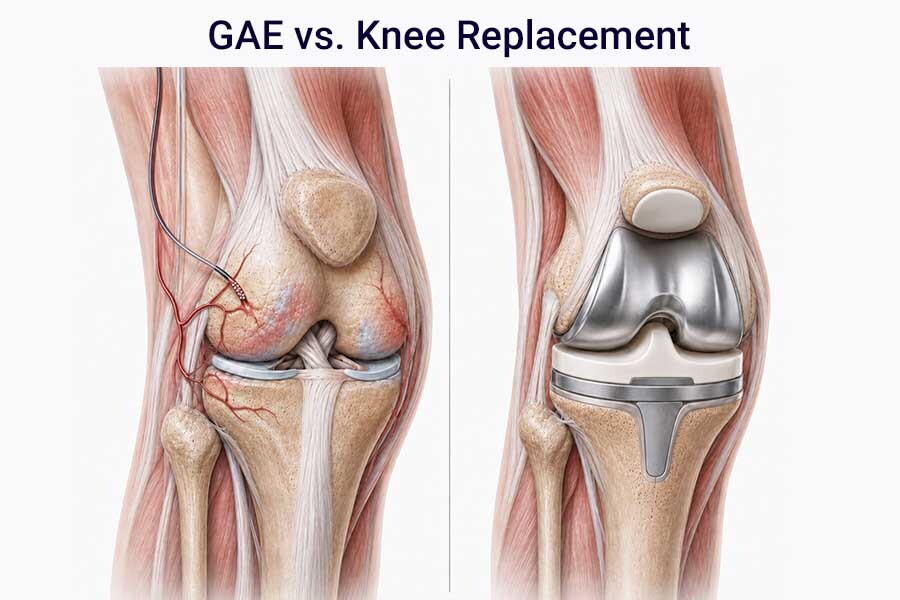
Genicular artery embolization (GAE) is a minimally invasive procedure that reduces the inflammation and other symptoms of knee pain. Instead of making large incisions, your doctor inserts a tiny catheter through a small entry point. Knee replacement surgery is a major orthopedic procedure that involves removing damaged parts of your knee joint and replacing them with artificial components.
GAE also comes with lower risks and side effects, whereas you experience a higher risk of complications like infection or blood clots with knee replacement. At the Astra Knee Pain Center, you meet expert doctors who specialize in non-surgical treatments like GAE, which is a proven alternative to total knee replacement. They’ve helped countless people reduce pain, avoid major surgery and regain mobility.
How Effective is GAE vs. Knee Replacement for Reducing Knee Pain?
GAE provides meaningful pain relief for many people, especially if you’re dealing with moderate to severe osteoarthritis and other knee pain conditions. Clinical studies have shown that many people report a 50 to 75 percent reduction in pain within a few weeks after the procedure. Some people experience even better results after three to six months.
Knee replacement is generally seen as a long-term solution. Artificial joints last 15 to 20 years, especially if you follow post-operative care instructions, engage in rigorous physical therapy and maintain a healthy weight. After recovery, many people report 80 to 90 percent pain reduction.
GAE also works well alongside other non-surgical treatments, such as:
- Physical therapy
- Weight management
- Platelet-rich plasma (PRP) injections
How Long Is Recovery After GAE vs. Knee Replacement?
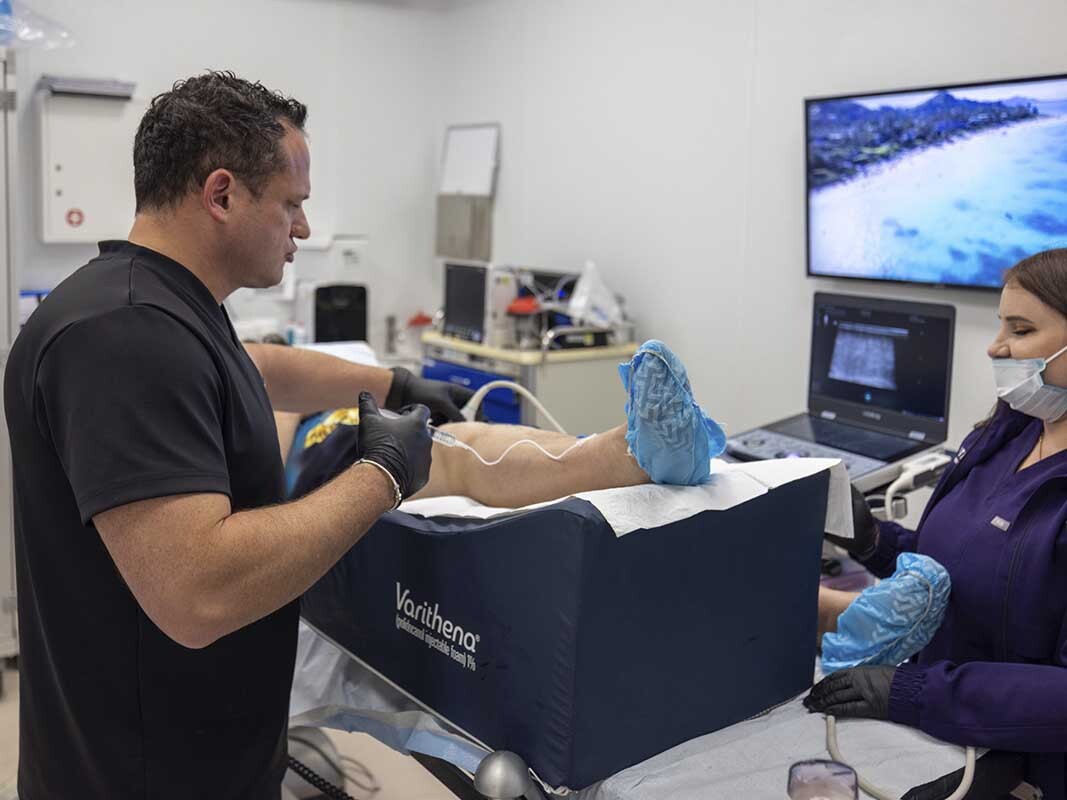
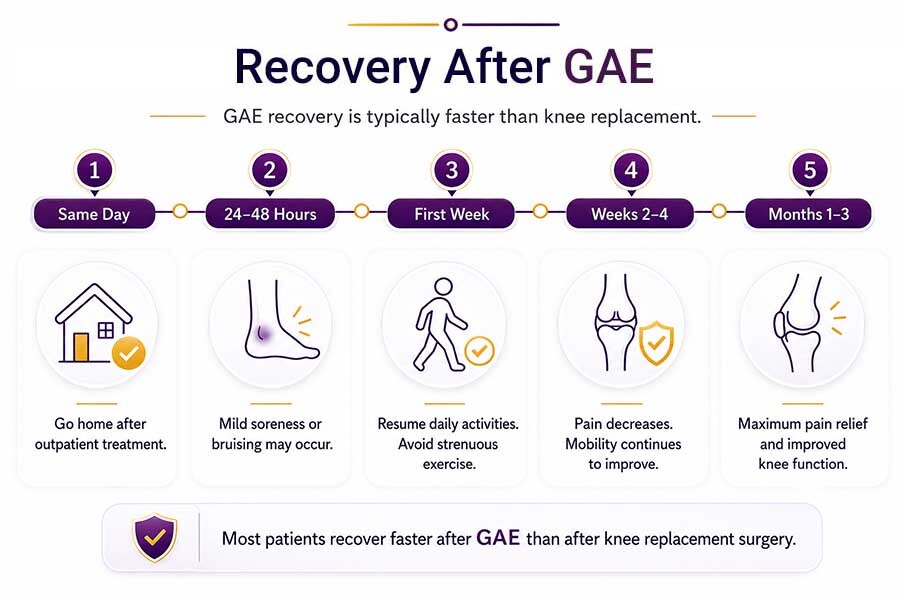
GAE is an outpatient procedure, which means you usually go home the same day, unlike knee replacement surgery that requires hospital stays and a long healing process. You can usually walk shortly after the procedure without the need for crutches or assistance.
GAE recovery timeline typically includes:
- The first 24 to 48 hours.You may feel slight soreness or bruising at the catheter site, but it fades quickly.
- The first week.Pain relief begins within days. You can return to normal activities but avoid strenuous exercise.
- Weeks 2 to 4.Pain and inflammation continue to decrease. Mobility improves steadily.
- Months 1 to 3.You experience the full benefits including reduced pain, improved function and greater ease in daily movement.
A full knee replacement involves major surgery and a lengthy healing process. While it’s effective for advanced joint damage, it demands a strong commitment to physical therapy and rehabilitation. That’s why GAE is becoming popular among people who want to avoid total knee replacement.
Who’s a Good Candidate for GAE vs. Knee Replacement?
Your age, the extent of your knee pain, your overall health and even your lifestyle goals all matter when deciding between GAE vs. knee replacement. Even if your condition feels advanced, GAE may still help you manage pain if you’re not ready to undergo surgery.
Astra Knee Pain Center doctors suggest GAE for certain conditions, including:
- Post-traumatic knee arthritis
- Chronic inflammatory knee pain
- Failed conservative therapy
- Knee bursitis
- Meniscus tear
- Patellofemoral syndrome
- Chondromalacia patella
If your joint is severely worn out and experiencing symptoms such as bone-on-bone grinding, GAE may not be enough. Surgery may be the best option for long-term relief. If you’ve already tried GAE, physical therapy, medications and injections and your pain still limits you, knee replacement may be necessary.
Which Procedure Is Likely to Be Covered by My Insurance?
Knee replacement surgery has been performed for decades and is widely recognized as a medically necessary treatment for severe knee arthritis. Because of its long-standing success and extensive research, many insurance plans including Medicare and private insurers cover it.
Even with insurance, you may still be responsible for costs, including:
- Copayments
- Deductibles
- Coinsurance
GAE is a newer program, so insurance coverage for GAE varies significantly. While it’s showing great promise and approved by the FDA, it isn’t yet considered standard by all insurance companies.
Are There Any Lifestyle or Activity Restrictions After Each Treatment?
When choosing between GAE vs. knee replacement, don’t just focus on pain relief. Think about how each option affects your daily life and mobility. After GAE, you’re encouraged to start light walking within a day or two. Many people resume normal routines quickly but avoid heavy lifting or intense exercise for a week.
In contrast, knee replacement involves more significant lifestyle adjustments. You need months of physical therapy to regain strength and mobility. Long-term, you may need to avoid high-impact activities like running or jumping to protect the artificial joint. Contact the Astra Knee Pain Center to find out if you’re a good candidate for GAE.
Updated on Jun 30, 2026 by Dr. George Bolotin (Knee Pain Specialist) of Astra Knee Pain Center
Astra Knee Pain Center Brooklyn
4209 Ave U, Suite A.
Brooklyn, NY 11234
(347) 934-9068
Astra Knee Pain Center Bronx
869 E Tremont Ave
Bronx, NY 10460
(929) 447-4563
Astra Knee Pain Center Queens
30-71 Steinway St,
Astoria, NY 11103
(929) 486-2201