
GAE specialists in Brooklyn and the Bronx at the Astra Knee Pain Center are finding remarkable results from an innovative treatment for knee pain. Genicular artery embolization or GAE treats knee pain for much longer than steroid injections and other minimally invasive treatments. Learn if GAE vs. cortisone injections is right for you. Call the best GAE doctors in Brooklyn or the Bronx to set up a consultation.
How Can I Compare GAE vs. Steroid Injections?
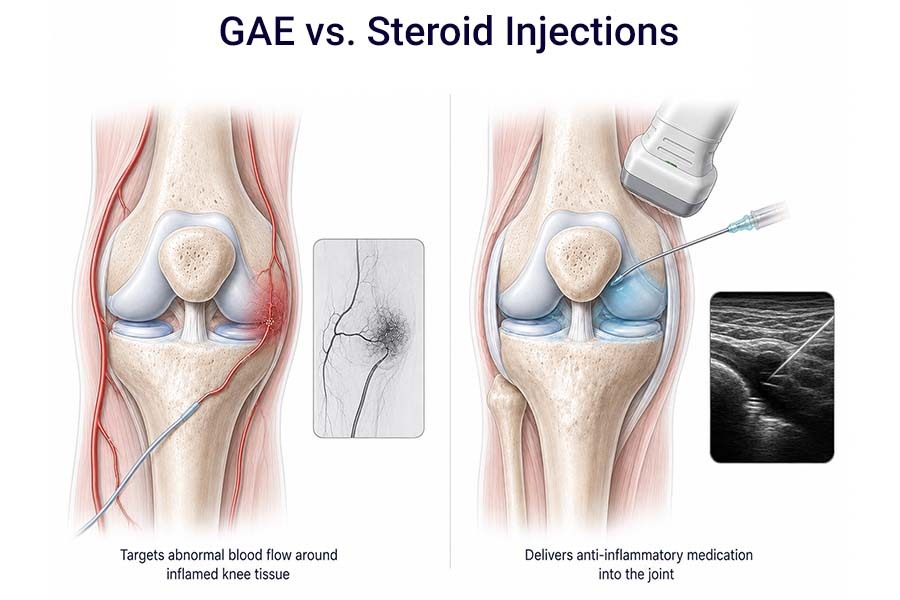
Genicular artery embolization (GAE) and steroid injections both aim to relieve knee pain, but they work in different ways. GAE is a minimally invasive procedure that targets the small blood vessels supplying the inflamed tissue around your knee. Steroid injections also are anti-inflammatory, providing temporary relief.
Your knee pain doctor recommends steroid injections for injury and overuse conditions, like tendonitis, while GAE is an ideal treatment for osteoarthritis of the knee and other inflammatory knee pain conditions. The experienced knee pain specialists in Brooklyn and the Bronx at the Astra Knee Pain Center, explain the difference and can tell you if you qualify for GAE.
How Do Steroid Injections Work Compared to GAE?
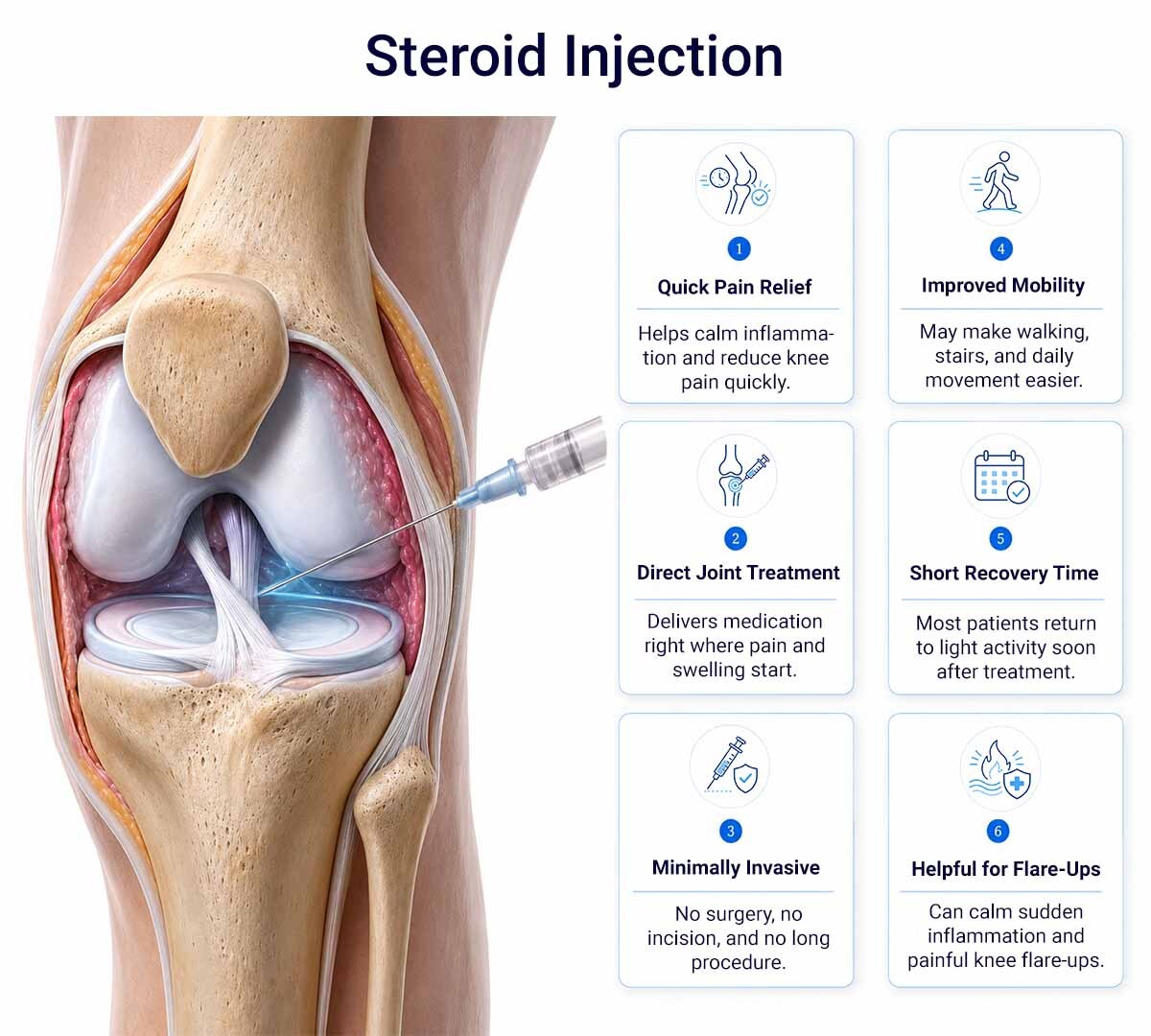
Steroid injections deliver a strong anti-inflammatory medication called corticosteroids directly into your knee joint. The medication calms your immune response and reduces your symptoms. The injection is quick and done in a clinic. Your doctor may use ultrasound or X-ray guidance to ensure the medication is placed precisely.
You may feel brief pressure or mild discomfort, but most people tolerate it well. Repeat injections may be needed, though there’s a limit to how often they’re given because overuse may weaken your joint tissues. Steroid injections are a valuable option if you’re looking for fast relief from knee pain.
Benefits include:
- Quick pain relief
- Direct treatment
- Minimally invasive
- Improved mobility
- Short recovery time
What Conditions Are Best Treated with GAE vs. Steroid Injections?
GAE works through a completely different approach than steroid injections. This non-surgical treatment targets the source of your knee pain and interrupts pain signals. GAE is especially effective for chronic or persistent knee pain that hasn’t responded to medications, physical therapy or other conservative treatments.
You may benefit from GAE if you have a condition, such as:
- Post-traumatic knee arthritis
- Chronic inflammatory knee pain
- Knee bursitis
- Meniscus tear
- Patellofemoral syndrome
- Chondromalacia patella
Recovery from injections usually doesn’t take any time at all unless you have a reaction to the medicine. The genicular artery embolization recovery timeline can take about three days to a week before you’re completely ready to resume your normal activities.
Which Lasts Longer for Knee Pain Relief?
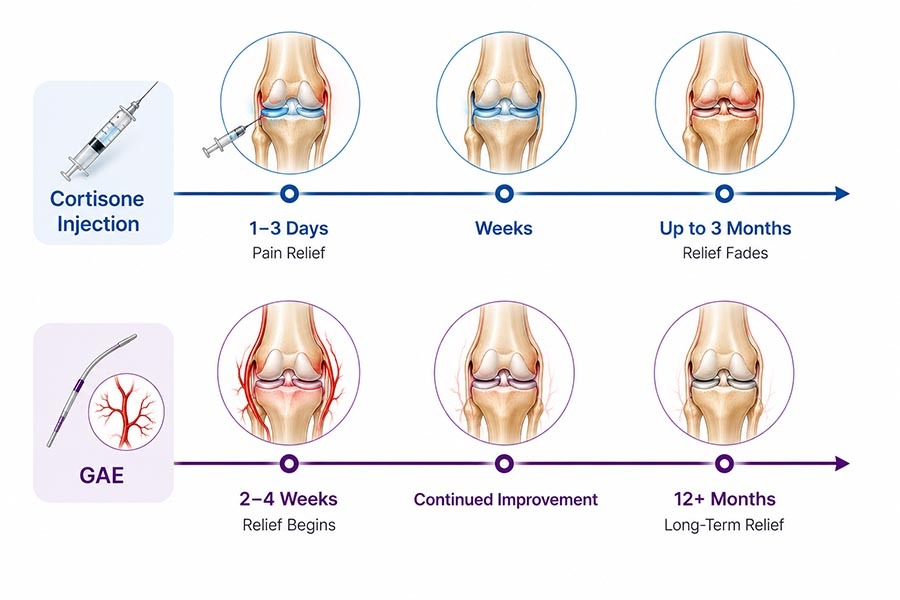
Cortisone injections start relieving your pain in as little as one to three days. The medication calms swelling and stiffness inside your knee joint. Your relief could last anywhere from a few weeks to three months. If your knee pain condition is severe, you may notice it fading faster.
Following GAE, though, may require two to four weeks before you experience noticeable differences in symptoms like instability and locking and bone-on-bone grinding. And after GAE, continued improvement progresses in the months that follow.
GAE tackles the underlying cause instead of just masking the pain. You enjoy results that last longer than treatments that only provide short-term chemical relief. You could have 12 months or more of significant pain relief from just one procedure.
You may be a candidate for GAE if you:
- Experience knee pain due toaging and degeneration
- Have a desire to avoid total knee replacement
- Tried PRP and stem cell treatments with no results
What Are the Potential Risks of GAE vs. Cortisone Injections?
When you get a cortisone injection, you may experience some side effects, many of which are typically mild and temporary. You may feel pain at the injection site, temporary swelling and bruising or notice redness near the area. If you have diabetes, your blood sugar may rise temporarily.
While severe side effects are rare, they include:
- Infections at the injection site
- Elevated blood pressure
- Fluid retention
- Increased risk of osteoporosis with repeated injections
Like any medical procedure, GAE carries some potential risks and side effects, although it’s generally considered a safe and effective option for managing chronic knee pain. The procedure requires a specialized interventional radiology facility and a knee pain specialist in Brooklyn to ensure it’s performed safely.
Risks are greatly minimized when you rely on the expertise of a knee pain doctor, but may include:
- Temporary discomfort in your knee for a few days
- Allergic reactionif you have contrast dye allergies
- Restricted blood flow in surrounding tissue
Conveniently located in New York City, the Astra Knee Pain Center has the most updated equipment and a top-notch team of GAE specialists in Brooklyn and the Bronx. Contact them today to learn which therapy — GAE vs. steroid injections — Is right for you.
Updated on Jul 6, 2026 by Dr. George Bolotin (Knee Pain Specialist) of Astra Knee Pain Center
Astra Knee Pain Center Brooklyn
4209 Ave U, Suite A.
Brooklyn, NY 11234
(347) 934-9068
Astra Knee Pain Center Bronx
869 E Tremont Ave
Bronx, NY 10460
(929) 447-4563
Astra Knee Pain Center Queens
30-71 Steinway St,
Astoria, NY 11103
(929) 486-2201