
When you need the services of knee pain specialists in Brooklyn and the Bronx, call the experts at the Astra Knee Pain Center. They have access to the latest diagnostic and treatment options, including genicular artery embolization (GAE). The leading chronic post-traumatic pain doctors use GAE for the treatment of meniscus tears among athletes and the elderly. Knee pain from injury is one of the main reasons people in NYC call on the best meniscus tear treatment doctors in Brooklyn and the Bronx.
What Is a Meniscus Tear?
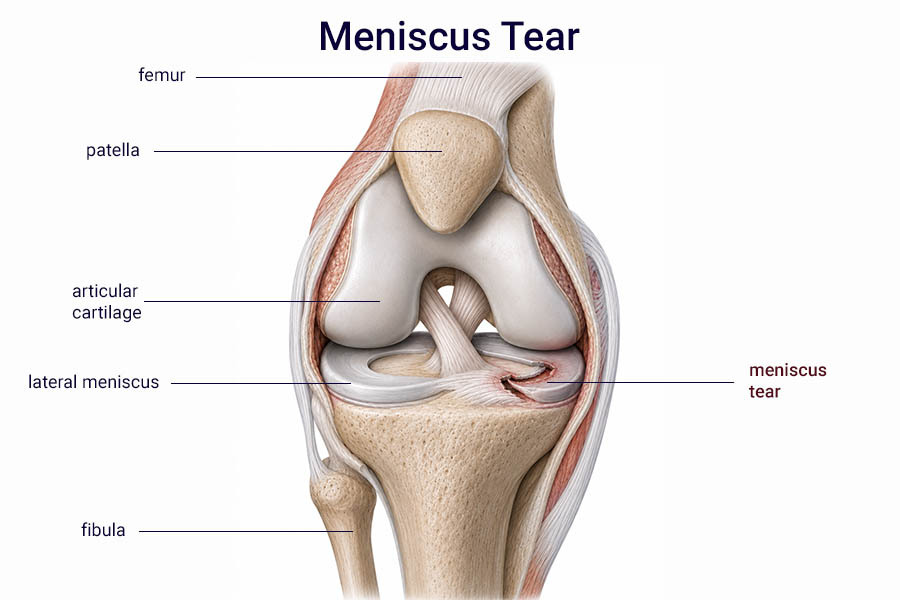
A meniscus tear is a knee pain condition usually caused by an injury or overuse that impacts the meniscus, which is a C-shaped piece of cartilage in your knee. It functions as a shock absorber between the femur and tibia. It occurs when the knee is forcefully twisted or rotated.
If you’re experiencing knee pain, clicking, swelling or stiffness, see your meniscus tears doctors in Brooklyn at the Astra Knee Pain Center. Untreated tears may lead to chronic post-traumatic pain.
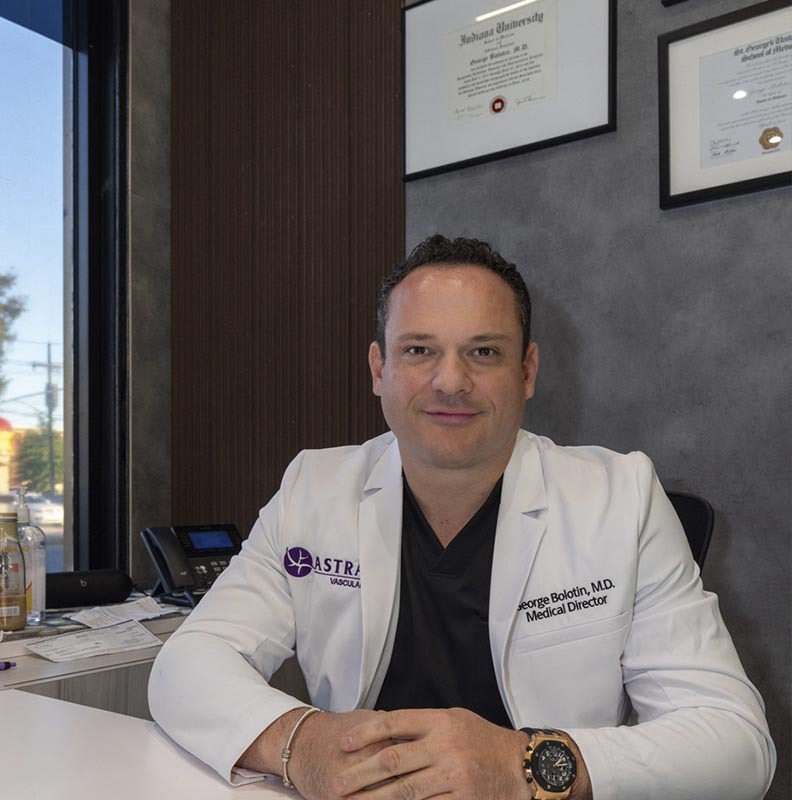
Timely diagnosis leads to improved outcomes, which is only possible through experienced meniscus tear treatment doctors in Brooklyn. Dr. George Bolotin and his team of skilled knee pain specialists use advanced imaging, provide diagnoses on the same day and offer non-surgical treatment options like genicular artery embolization (GAE).
What Causes a Torn Meniscus?
A meniscus tear is a common knee pain from injury among athletes and older adults. It happens when your knee is forcefully twisted or bent in a way that puts excessive stress on the cartilage. Meniscus tear doctors in the Bronx see athletes continually with chronic post-traumatic pain who play sports like basketball, soccer and tennis.
Other causes include:
- Heavy lifting
- Deep squatting
- Trauma to the knee from an auto accident
- Degenerative changes
Degeneration from osteoarthritis also leads to the need to see a knee pain specialist in Brooklyn, even without a knee injury. Additionally, some people are more prone to experience a torn meniscus, particularly if you’ve had previous knee pain from injury, are obese or have poor muscle strength.
Are Symptoms Obvious in a Torn Meniscus?
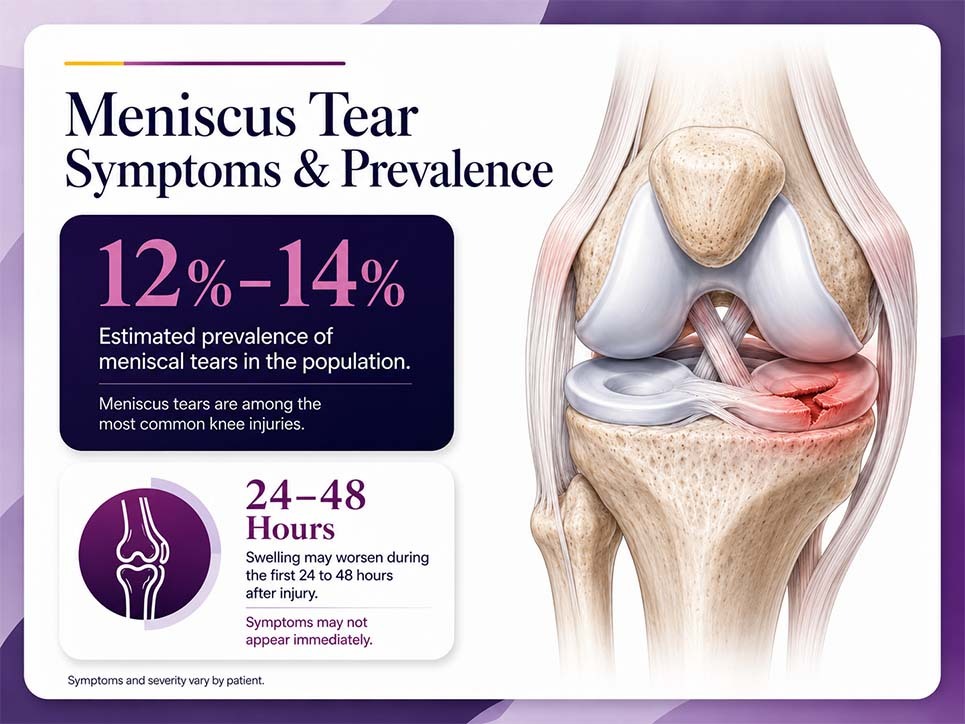
Symptoms of a torn meniscus are not always obvious. Initially, you may notice a sharp pain in the knee, especially when twisting or rotating it.
The signs vary, but common symptoms include:
- Swelling that worsens over the next 24 to 48 hours after an injury
- Difficulty bending or straightening the knee fully
- A feeling that your knee is locking
- Instability with a feeling that your knee might give out
If you keep delaying getting your symptoms checked, you run the risk of long-term issues like permanent loss of motion, cartilage damage due to bone-on-bone grinding, joint instability and muscle weakening.
Your doctor combines different diagnostic methods, such as MRIs, x-rays and arthroscopy, to confirm a meniscus tear. Your doctor usually starts with a physical exam to check for swelling or tenderness and then asks you to perform movement exercises, while he watches for abnormalities.
What’s the Treatment for a Meniscus Tear in Brooklyn?
Many doctors tell you that you need a knee replacement when conservative methods of treatment fail.
Meniscus tear treatment specialists in Brooklyn and the Bronx usually begin with traditional, conservative therapy that may include:
- The RICE method, with rest, ice, compression and elevation
- Physical therapy to strengthen the muscles around the knee
- Anti-inflammatory medicines that may reduce swelling
- Knee braces to support and protect the knee
Recovery time can keep you out of commission anywhere from four to six weeks. If the tear is large and causing mechanical symptoms, then your knee pain specialist in the Bronx at the Astra Knee Pain Center recommends the best way to avoid a total knee replacement with GAE.
Patient Experience
How to Find a Doctor for Meniscus Tear Treatment in Your Area
Here are practical steps to help you find the right specialist for your condition nearby:
- Start by asking your primary care physician or an orthopedic provider for a referral to a knee specialist experienced in treating meniscus injuries
- Look through insurance provider directories or platforms like Zocdoc and Healthgrades to find in-network specialists who treat knee injuries
- Use Google Maps and search for “meniscus tear treatment near me” or “meniscus tear doctor near me” to identify nearby clinics, check locations, and compare patient ratings
- Read patient reviews on Google to understand how clinics manage knee pain, recovery, and overall patient experience
- Visit clinic websites to learn about available treatments, including physical therapy, guided injections, or minimally invasive procedures
- Choose providers with experience in orthopedics, sports medicine, or interventional pain management, as these specialties commonly treat meniscus tears
- Call the office to confirm they evaluate and treat meniscus injuries and ask what non-surgical options are available
- Schedule a consultation to review your symptoms, discuss imaging such as MRI if needed, and go over treatment options
- Select a clinic that offers a structured, personalized treatment plan focused on pain relief, restoring knee function, and preventing further joint damage
At Astra Knee Pain Center, our team of interventional radiologists, pain management doctors, and rehabilitation physicians specializes in non-surgical and minimally invasive solutions for meniscus injuries. Using advanced imaging and targeted treatments, we focus on reducing inflammation, improving knee stability, and helping you return to normal activity safely.
Do I Qualify for GAE?
Genicular artery embolization provides relief by reducing blood flow to the inflamed tissues in the knee, which leads to a decrease in pain and swelling. It’s an innovative procedure designed for treatment of chronic post-traumatic pain and knee pain from injury. Consider a second opinion to find an alternative to knee replacement.
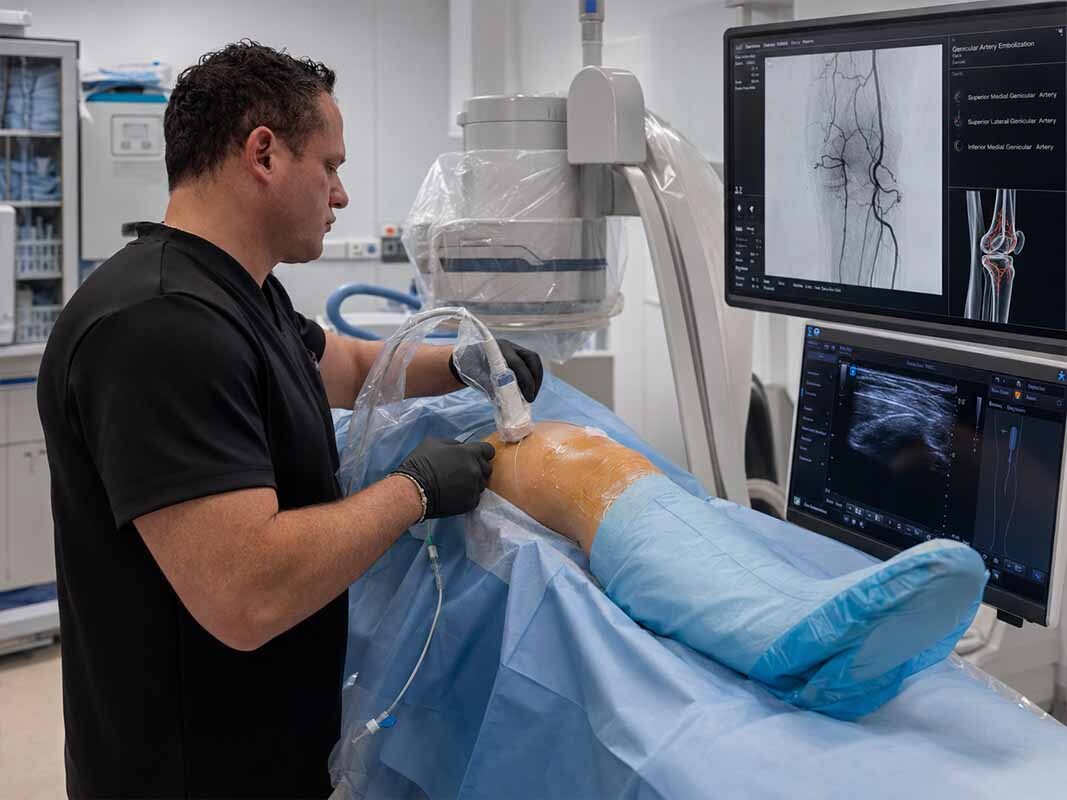
Your meniscus tear treatment doctors in Brooklyn and the Bronx base your eligibility for GAE on a number of factors, primarily your overall health and how long you waited to seek treatment after a meniscus tear. Contact the Astra Knee Pain Center to learn more about what to expect during genicular artery embolization. Their team of skilled meniscus tears doctors in Brooklyn explain the risks and side effects, as well as the recovery timeline.
Updated on Jun 29, 2026 by Dr. George Bolotin (Knee Pain Specialist) of Astra Knee Pain Center
Astra Knee Pain Center Brooklyn
4209 Ave U, Suite A.
Brooklyn, NY 11234
(347) 934-9068
Astra Knee Pain Center Bronx
869 E Tremont Ave
Bronx, NY 10460
(929) 447-4563
Astra Knee Pain Center Queens
30-71 Steinway St,
Astoria, NY 11103
(929) 486-2201