
It can be disappointing when conservative treatments for knee pain don’t work. After undergoing weeks or months of physical therapy, pain injections or PRP treatment, you hoped you could avoid getting a total knee replacement (GAE). There is, however, another alternative to knee replacement surgery called genicular artery embolization, an advanced therapy used by the expert knee pain doctors in Brooklyn and the Bronx at the Astra Knee Pain Center. Call today to find out if you’re good candidate for GAE and move on from PT and the PRP injections.
What Happens When Conservative Therapy Doesn’t Relieve Knee Pain?
When conservative therapy for knee pain doesn’t provide relief, several options are available that knee pain doctors can try. One of the most common forms of knee pain treatment is knee replacement surgery that many people want to avoid. Fortunately, there are other non-surgical methods that may be considered to treat knee pain when a traditional approach doesn’t work.
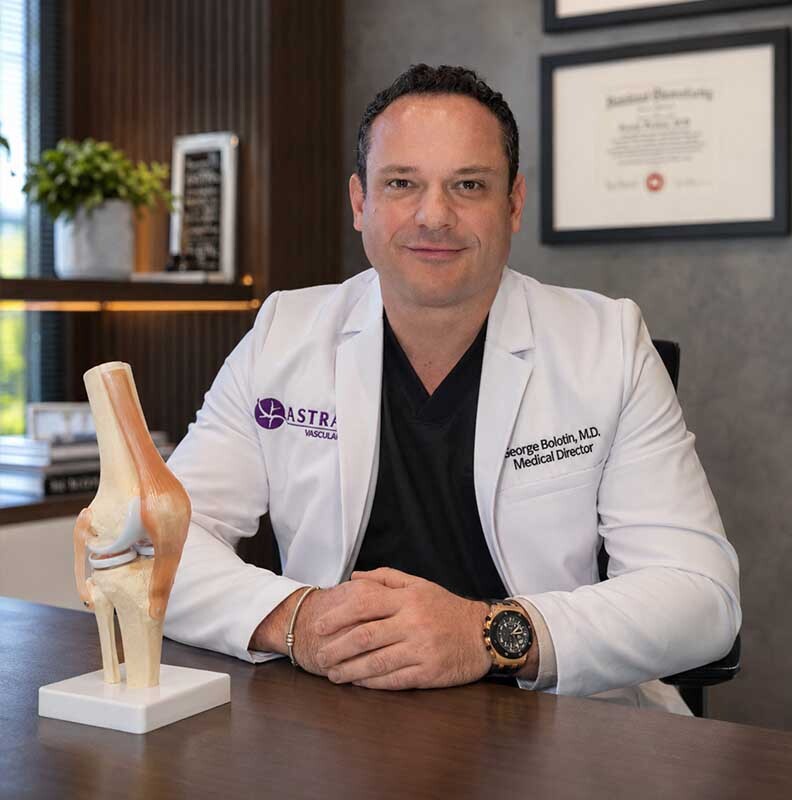
While failed conservative therapy in treating knee pain conditions can be frustrating, it doesn’t mean you have to live with the pain. The best knee pain specialists at the Astra Knee Pain Center have solutions. Dr. George Bolotin and his team are committed to helping you obtain relief from pain and mobility issues. They offer alternatives to total knee replacement that work.
What Does Conservative Therapy for Knee Pain Include?
Conservative therapy usually is the first line of defense when you notice knee pain. And while you may think that you can take care of the pain at home, it’s best to visit a knee pain specialist just to make sure you didn’t injure your knee too severely. Waiting can lead to complications.
If it turns out not to be too bad, your doctor may recommend at-home remedies that include:
- Resting and avoiding activities that increase the pain
- Elevating an injured knee
- Applying ice
- Taking over-the-counter medications, such as ibuprofen or naproxen
- Applying topical pain-relieving creams, such as capsaicin
If pain persists, your knee pain doctors may move you to the next level of what’s considered conservative treatment. Conservative treatments typically don’t involve any type of hands-on treatment or medical procedure.
Traditionally, other forms of conservative treatment may include:
- Prescription medications. Your knee pain doctor in the Brooklyn may prescribe a higher dose of non-steroidal anti-inflammatory drugs or Cox-2 inhibitors to reduce inflammation and pain.
- Orthotic devices. Orthotic devices such as shoe inserts and knee braces sometimes help relieve pain.
- Physical therapy (PT). Knee conditions caused by or aggravated by weakened muscles sometimes respond to PT.
- TENS Electrical impulses shoot through damaged tissue to speed up healing, a technique often employed during PT.
- Weight loss. Low-impact activities, coupled with a healthy diet, can help you lose weight and take some of the pressure off your painful knees.
Do Pain Injections Relieve Knee Pain?
For many people, pain injections relieve knee pain on a temporary basis. Pain injections are a non-surgical treatment option for chronic knee pain that’s not responding to other forms of treatment. It can be painful in itself and usually requires multiple shots.
Types of injections that can be given include:
- Steroid shots. Symptom relief may last a few weeks to a few months and shots can usually be repeated every three months.
- Hyaluronic acid.It lubricates the knee joint and improves mobility. Having a hyaluronic acid injection may provide symptom relief for up to six months.
- Plasma-rich platelet injections (PRP injections). Platelet-rich plasma is created using your own blood. It can take several weeks to notice symptom relief.
Our knee pain specialists offer physical therapy and pain injections that benefit some people but provide little or no relief to others. At the Astra Knee Pain Center, the latest solution that’s proving to have exceptional results as an alternative to surgery is genicular artery embolization (GAE).
Does GAE Work as a Substitute for PRP Treatment, Pain Injections and PT?
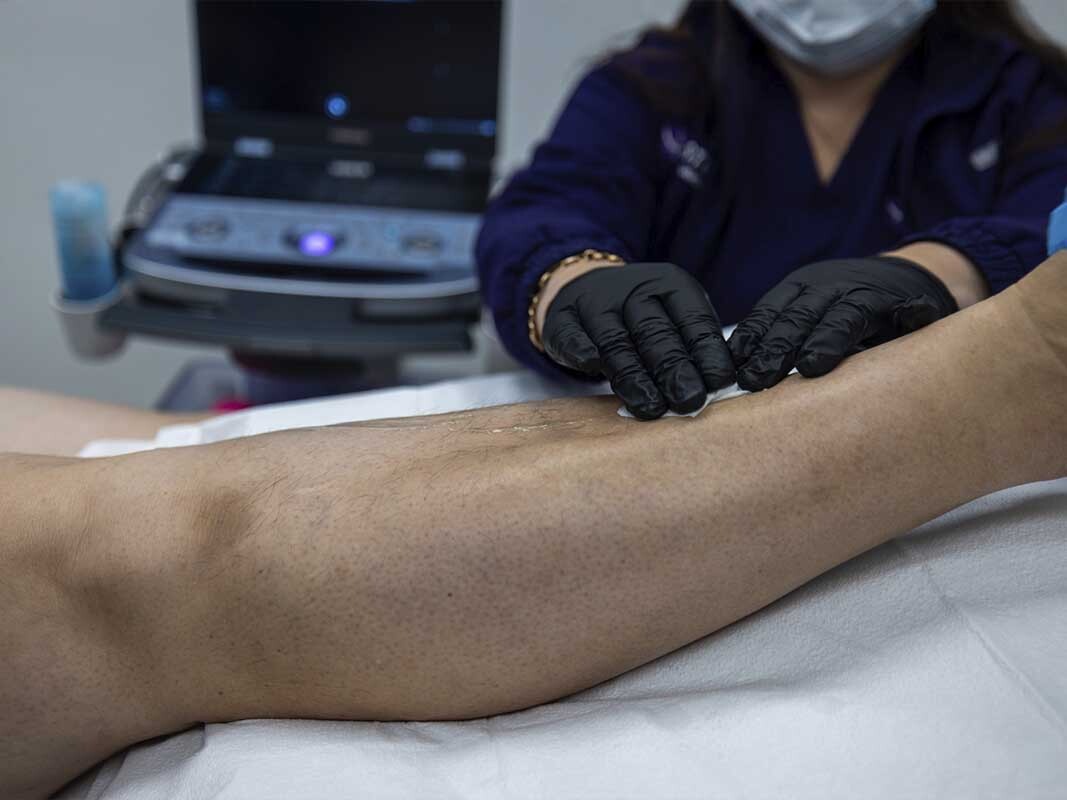
GAE is a minimally invasive procedure that is an alternative option for treating chronic knee pain. It involves blocking the blood flow to the lining of the knee to reduce inflammation. For many people, it provides immediate long-term relief from knee pain caused by osteoarthritis and other degenerative conditions.
Genicular artery embolization is effective for a wide range of conditions when you’re experiencing swelling and stiffness, bone-on-bone grinding or instability and locking.
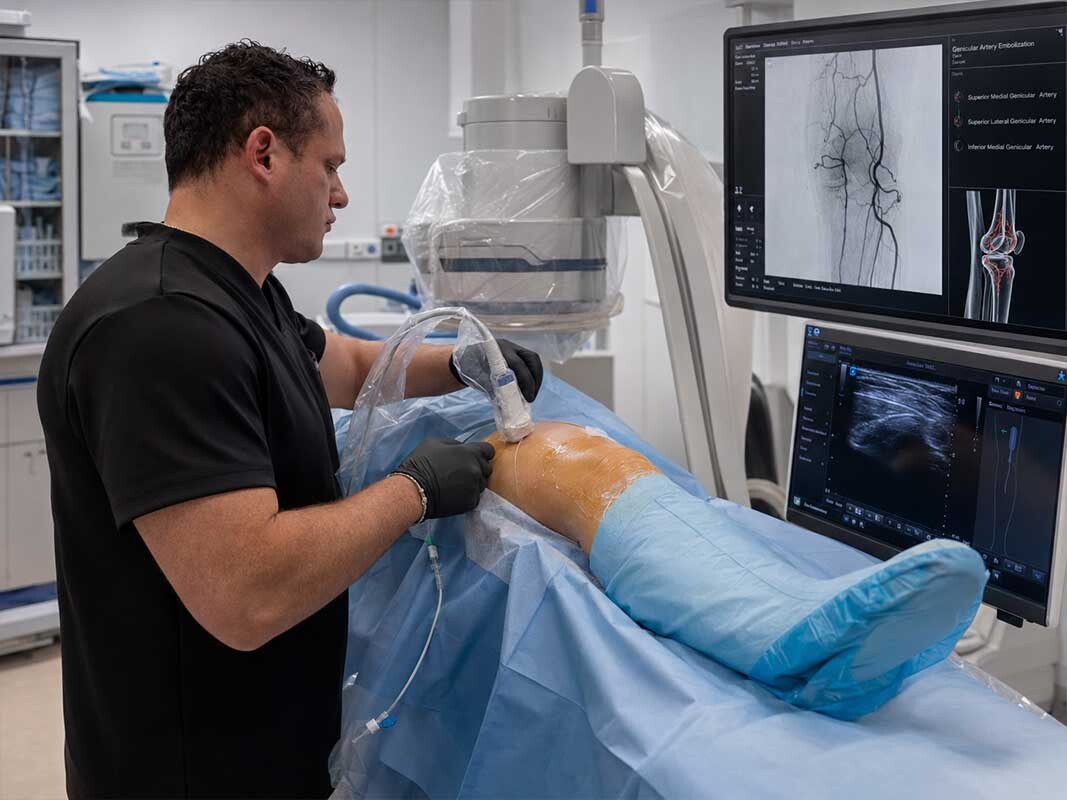
Contact your knee pain specialist in Brooklyn at the Astra Knee Pain Center for a second opinion on knee surgery and more information about the remarkable GAE procedure for conditions that also include:
- Post-traumatic knee arthritis
- Non-autoimmune chronic inflammatory knee pain
- Knee bursitis
- Meniscus tears
- Patellofemoral syndrome
- Chondromalacia patella
Updated on Jul 7, 2026 by Dr. George Bolotin (Knee Pain Specialist) of Astra Knee Pain Center
Astra Knee Pain Center Brooklyn
4209 Ave U, Suite A.
Brooklyn, NY 11234
(347) 934-9068
Astra Knee Pain Center Bronx
869 E Tremont Ave
Bronx, NY 10460
(929) 447-4563
Astra Knee Pain Center Queens
30-71 Steinway St,
Astoria, NY 11103
(929) 486-2201