
Grinding knee pain affects your daily life by reducing your mobility and keeping you from enjoying your favorite activities. The pain may even affect your livelihood. Also called runner’s knee, this knee pain condition is best treated by a knee pain specialist in Brooklyn and the Bronx at the Astra Knee Pain Center. Our specialists offer the latest in non-surgical treatments, including genicular artery embolization. Call them to book a consultation.
What Is Chondromalacia Patella?
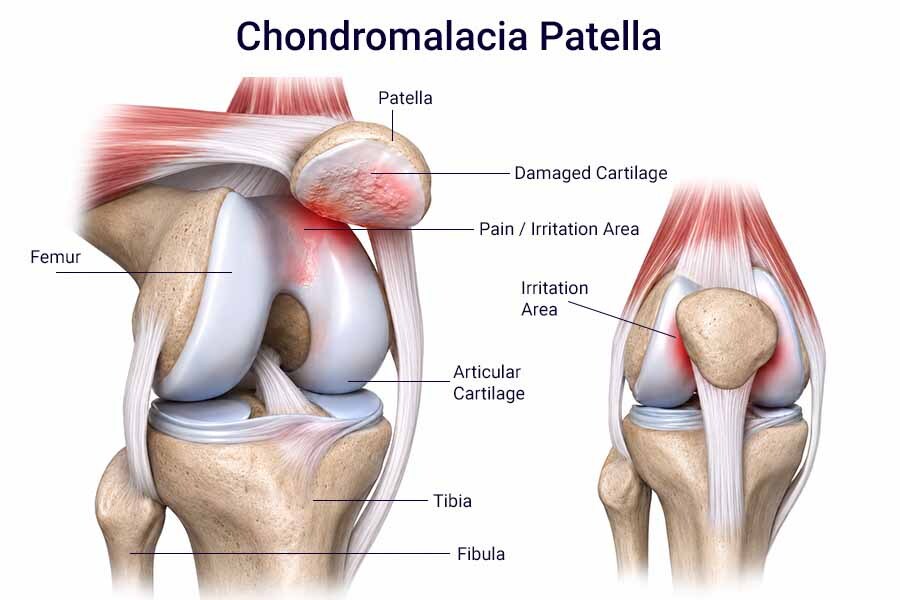
Chondromalacia patella is a condition that happens when the cartilage on the underside of your kneecap becomes soft, worn or damaged. It’s sometimes referred to as runner’s knee although that term also applies to other causes of knee pain like patellofemoral syndrome Your kneecap starts to rub directly against your thigh bone instead of gliding easily over it. This friction leads to grinding knee pain along with swelling and stiffness.
At the Astra Knee Pain Center, experienced knee pain doctors in Brooklyn listen to your concerns, examine your symptoms and use precise diagnostics to uncover the reason for your grinding knee pain. Whether your pain comes from chondromalacia patella, osteoarthritis or another joint condition, once they know the cause, they develop a customized non-surgical treatment plan to protect your knee from further inflammation and joint damage.
What Causes Chondromalacia Patella?
Chondromalacia patella usually develops for a few key reasons. Injury and overuse such as taking a direct hit to your knee or repeating activities like running, jumping or climbing stairs put constant strain on the joint and gradually wears away the cartilage.
Aging and degeneration may also contribute, as years of natural wear and tear thin the cartilage and make it less effective at cushioning your movements.
Improper kneecap movement may result from factors, such as:
- Poor alignment of your kneecap due to a congenital condition
- Weak hamstrings and quadriceps
- Muscle imbalance between your adductors and abductors
You become more prone to chondromalacia than others when your kneecap has suffered a dislocation, fracture or similar injury. If you’re female, you have a higher chance of developing a runner’s knee since your muscles tend to be less bulky than males. Flat feet also increase the amount of stress placed on your knee joints compared to higher arches.
What Are the Symptoms of Runner’s Knee?
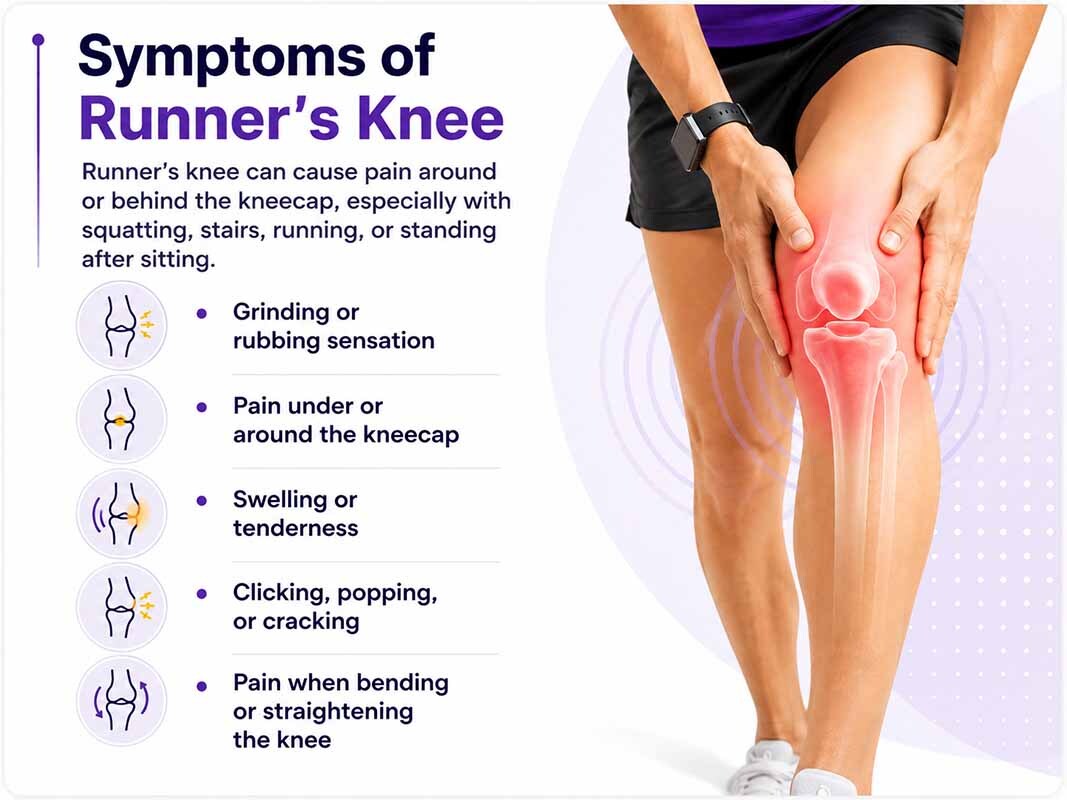
You may notice bone-on-bone grinding or rubbing when you move your knee. This happens because the cartilage cushioning your kneecap isn’t working properly. Activities like squatting or standing up after sitting for a long time may make this sensation worse.
You may also feel pain right under or around your kneecap. This pain worsens when you do activities that put pressure on your knee. Your knee may swell or feel tender when you touch it. Clicking, popping or cracking are also common symptoms of a runner’s knee especially when you bend or straighten it.
Your doctor identifies whether your symptoms are due to chondromalacia patella or other knee pain conditions, such as:
What Treatment Options Are Available for Grinding Knee Pain Conditions?
At the first sign of knee pain, you should get a firm diagnosis from your knee pain doctors. Since most pain is the result of inflammation, you may qualify for a remarkable new treatment called genicular artery embolization (GAE). GAE is a minimally invasive procedure that blocks blood flow to the small arteries causing that inflammation. This treatment provides you with long-lasting relief and is an effective alternative to knee replacement surgery.
Your doctor may recommend physical therapy to improve muscle strength that supports your knees. While PT doesn’t relieve your knee pain, it works well in conjunction with GAE.
Genicular artery embolization also is an effective replacement when conservative treatments fail and other treatments for chondromalacia patella don’t provide sufficient relief, such as:
- Steroid injections
- Platelet-rich plasma (PRP) and stem cell treatments
- TENS and other neuromodulation devices
How Can I Prevent Grinding Knee Pain?
Building strength in your quadriceps, hamstrings and hip muscles helps keep your kneecap aligned and reduces stress on your cartilage.
Other prevention techniques your knee pain doctor recommends to help you avoid total knee replacement include:
- Wearing supportive shoes
- Maintaining a healthy weight
- Warming up and stretching before moving
- Addressing knee pain early with knee pain specialists in Brooklyn and the Bronx
Contact the Astra Knee Pain Center in Brooklyn and the Bronx to learn more about GAE, its risks and side effects and the recovery timeline, versus recovery times involved with knee surgery.
Updated on Jul 2, 2026 by Dr. George Bolotin (Knee Pain Specialist) of Astra Knee Pain Center
Astra Knee Pain Center Brooklyn
4209 Ave U, Suite A.
Brooklyn, NY 11234
(347) 934-9068
Astra Knee Pain Center Bronx
869 E Tremont Ave
Bronx, NY 10460
(929) 447-4563
Astra Knee Pain Center Queens
30-71 Steinway St,
Astoria, NY 11103
(929) 486-2201