
Autoimmune diseases can lead to knee pain and conditions like osteoarthritis in the knee. For the most part, though, chronic knee pain is caused by other factors, ranging from poor mechanics to obesity and injury. Non-autoimmune knee pain can be successfully treated by knee pain specialists in Brooklyn and the Bronx at the Astra Knee Pain Center. Call for a consultation and find life-changing treatment to regain pain-free mobility.
What Is Chronic Inflammatory Knee Pain?
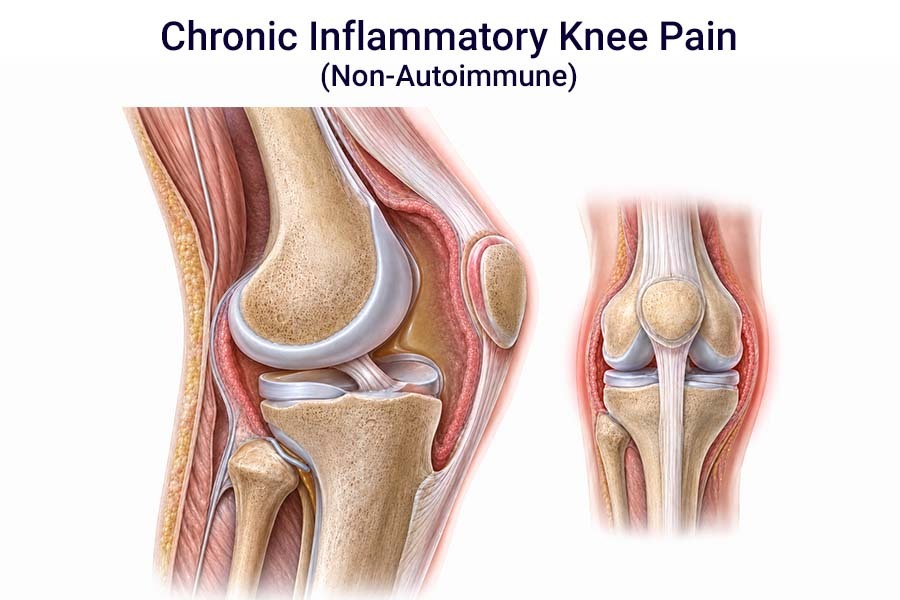
When knee inflammation and pain persist for more than three months, it’s known as chronic inflammatory knee pain. Ongoing inflammation persistently affects the knee joint and surrounding tissues, which can greatly affect your quality of life because of reduced mobility. A knee pain doctor can determine the cause of chronic knee pain and the best approach to treatment.
Knee pain specialists in the Bronx have non-surgical treatments when you struggle with knee pain. Dr. George Bolotin of the Astra Knee Pain Center is a top-notch knee pain doctor in Brooklyn and the Bronx. Dr. Bolotin is experienced in diagnosing and treating a wide range of knee pain conditions.
What Causes Non-Autoimmune Knee Pain?
Chronic inflammatory knee pain is sometimes caused by inflammatory arthritis. This refers to a group of autoimmune conditions that are triggered when the body releases inflammatory chemicals and attacks its own tissues rather than foreign invaders such as viruses or bacteria.
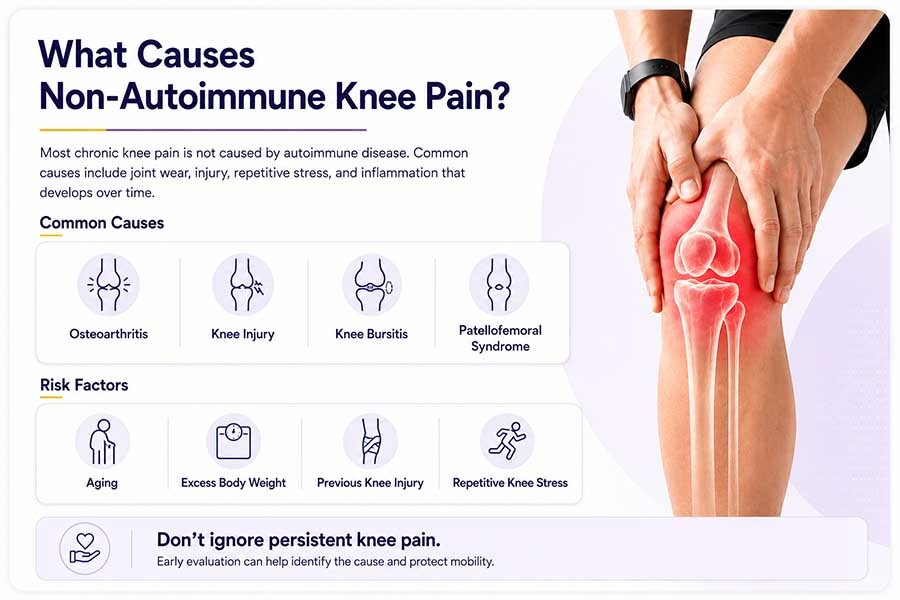
There are many causes of knee pain that aren’t related to autoimmune illnesses, including:
- Osteoarthritis of the knee from aging and degeneration
- Inflammation and joint damage from a traumatic injury
- Knee bursitis
- Patellofemoral syndrome
While many autoimmune conditions are inherited and not always definitively related to your lifestyle, several factors increase the risk of developing chronic non-autoimmune knee pain, including:
- The risk of developing chronic knee pain increases with age.
- Being overweight puts extra stress on the knees, speeding up the rate at which cartilage breaks down.
- Previous injury.If you’ve had knee injuries such as a fracture, dislocation or meniscus tear, it increases the risk of developing non-immune chronic inflammatory knee pain in the future.
- Frequent stress on the knee.Some occupations and sports strain the knees with heavy lifting or frequent pivoting or turning.
What Are the Symptoms of Chronic Inflammatory Knee Pain?
Symptoms of knee pain are easily recognized because you use your knee joint every time you walk, bend your leg and keep your balance. They help support your weight when you’re standing.
Anything that damages the bone or connective tissue in the knee can cause knee pain with symptoms, such as:
- The pain in your knee or surrounding tissues may be constant or intermittent. The pain may be sharp, shooting or a dull ache.
- Your pain ranges from mild to severe, but doesn’t go away after a few months.
- Your knee is swollen and red or warm to the touch.
- Your knee is stiff or difficult to bend, especially first thing in the morning or after periods of inactivity.
- You’re unable to straighten your knee all the way.
- Activity or bearing weight worsens your pain.
- You have difficulty walking or climbing stairs.
- You experience instability and locking, which means your knee may suddenly buckle or lock in place.
- You hear grinding, popping or clicking sounds, which may be a sign of cartilage wearing away with bone-on-bone grinding.
In some people, the pain from an injury returns months or years later, which is known as post-traumatic knee arthritis. Knee pain specialists pinpoint the cause of ongoing knee pain and the best treatment options.

How Is Chronic Knee Pain Treated?
Knee pain doctors usually use a conservative approach first when treating chronic knee pain.
Some treatment options include:
- Physical therapy
- Prescription or non-prescription medication
- Supporting the knee with a knee sleeve or brace
- Injections of corticosteroids or hyaluronic acid
- Surgery
One of the preferred methods of treatment by your knee pain specialist is a minimally invasive procedure called genicular artery embolization (GAE). It’s a safe, effective alternative to a total knee replacement.
GAE is often the first line of defense when conservative treatment methods fail. And unlike many other treatments, GAE has minimal risks and side effects.
What Happens if Chronic Knee Pain Isn’t Treated?
Chronic knee pain that’s persisted for several months shouldn’t be ignored.
When chronic knee pain isn’t treated, it can lead to complications, such as:
- Increased pain
- Reduced mobility
- Increased risk of additional knee injuries
- Debilitation and loss of independence
A knee pain specialist in the Bronx relieves chronic knee pain, avoiding knee replacement to prevent further injuries. Contact the Astra Knee Pain Center for more information or if you need a second opinion regarding knee surgery.
Updated on Jul 1, 2026 by Dr. George Bolotin (Knee Pain Specialist) of Astra Knee Pain Center
Astra Knee Pain Center Brooklyn
4209 Ave U, Suite A.
Brooklyn, NY 11234
(347) 934-9068
Astra Knee Pain Center Bronx
869 E Tremont Ave
Bronx, NY 10460
(929) 447-4563
Astra Knee Pain Center Queens
30-71 Steinway St,
Astoria, NY 11103
(929) 486-2201