
Knee arthritis isn’t just a disease that old people get. The degeneration of your knee joints can be just as devastating when you develop arthritis after a major injury. Post-traumatic knee arthritis can happen weeks or even years after your accident. When it begins, the knee pain from injury reduces your ability to enjoy normal physical activities. Genicular artery embolization is an advanced treatment offered by an expert knee arthritis doctor in Brooklyn and the Bronx. Call the post-traumatic knee arthritis specialists at the Astra Knee Pain Center for a consultation.
What Is Post-Traumatic Knee Arthritis?
When inflammation in the knee joint develops months or years after a traumatic knee injury, it’s known as post-traumatic knee arthritis. Knee pain from injury can make it difficult to walk, stand or exercise, but knee arthritis doctors in Brooklyn know the best way to treat a wide variety of knee pain conditions.
If you’re looking for a knee arthritis doctor in Brooklyn, Dr. George Bolotin and his team at the Astra Knee Pain Center in Brooklyn and the Bronx are an excellent choice.
Dr. Bolotin is committed to providing the best possible knee care for a full range of conditions, including:
- Osteoarthritis of the knee
- Chronic inflammatory knee pain
- Knee bursitis
- Meniscus tear
- Patellofemoral syndrome
- Chondromalacia patella
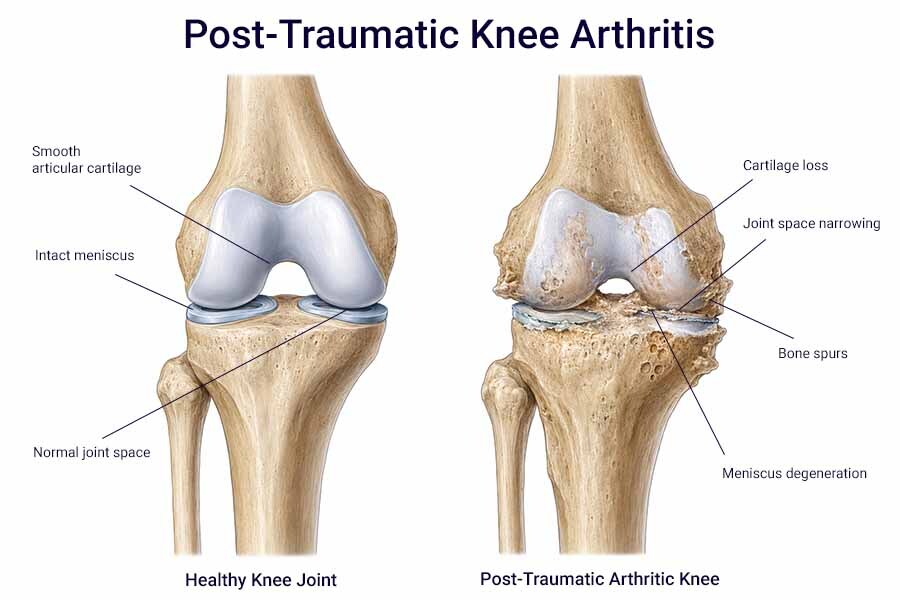
What Causes Post-Traumatic Knee Arthritis?
Experiencing a traumatic injury — such as a fall, vehicle accident or sports injury — may eventually lead to post-traumatic knee arthritis, especially if you try to return too quickly to the same level of activity you had before the injury.
Examples of types of injuries that may cause post-traumatic knee arthritis include:
- Fractures
- Sprains or strains
- Torn cartilage, such as a meniscus tear
- Torn ligament, such as the anterior cruciate ligament (ACL)
- Torn tendon
When any part of the knee is injured, there may be abnormal joint alignment, which can affect the way you walk. The knee can become unstable, accelerating joint degeneration. Injuring multiple ligaments or injuring the same joint multiple times makes the risk of developing post-traumatic knee arthritis even higher. Being overweight is another factor that increases the risk of developing knee arthritis.
Post-traumatic knee arthritis is a form of osteoarthritis or degenerative arthritis caused by wear and tear on the knee. Aging and degeneration may cause osteoarthritis to develop as you age, but post-traumatic knee arthritis can affect people of all ages.
Patient Experience
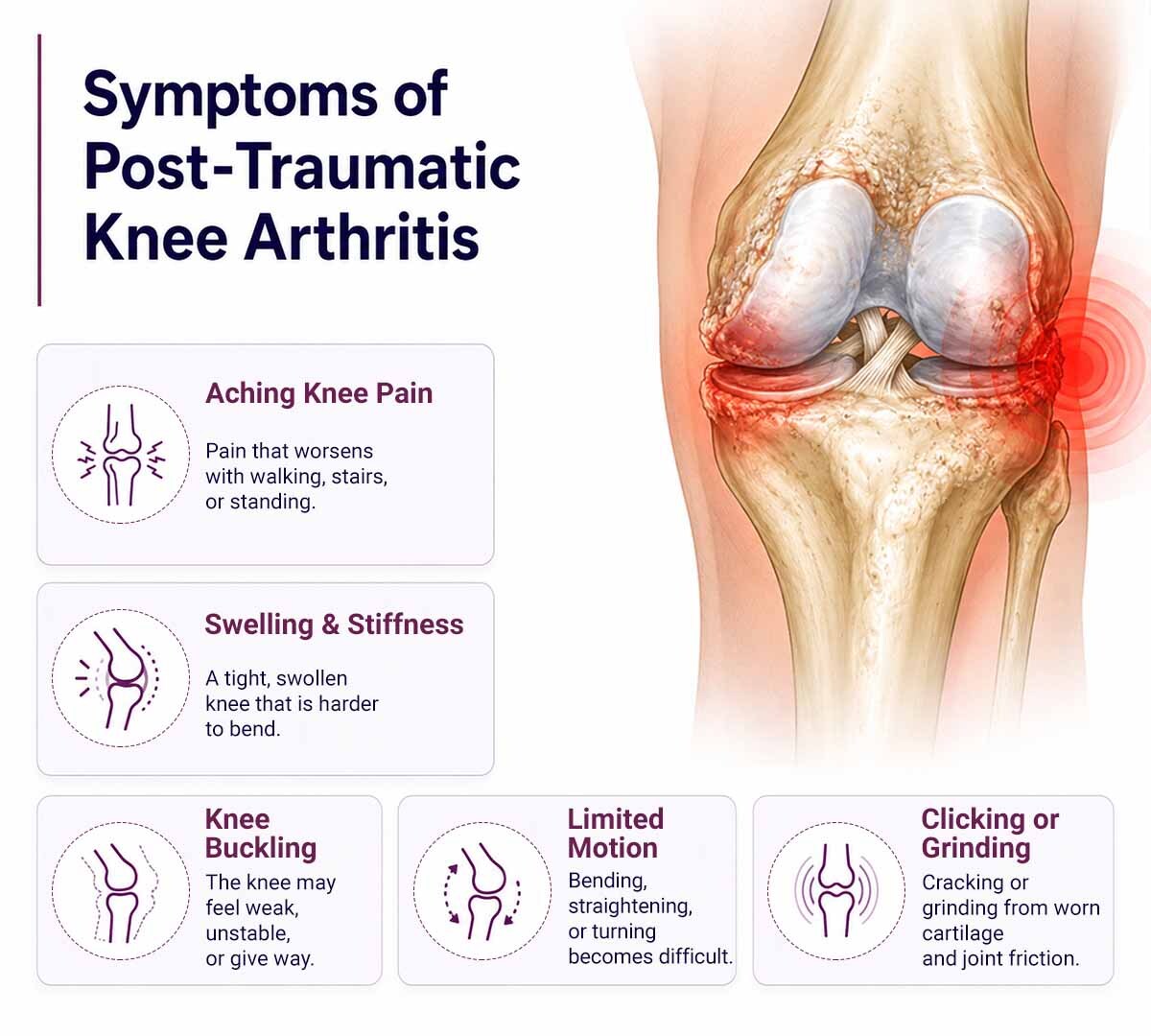
What Are the Symptoms of Post-Traumatic Knee Arthritis?
Joint pain is the most common symptom of all types of arthritis. Pain is usually described as throbbing or aching.
Other symptoms you may experience when inflammation and joint damage affect a previously injured knee include:
- Swelling and stiffness. Your knee becomes stiff and swollen, which makes it difficult to bend your knee. Stiffness may be especially noticeable first thing in the morning.
- Your knee may buckle or cause difficulty putting weight on the leg. Movements like straightening, bending or rotating the knee become more difficult.
- Clicking noises. Your knee may make clicking, cracking or grinding noises, caused by cartilage wearing away and bone-on-bone grinding.
Your knee arthritis doctor in the Brooklyn checks for tenderness, warmth or redness around the knee. Knee pain from injury may intensify with activity, especially vigorous activity. Working in a physically demanding job may cause the knee to degenerate more quickly. Some people with knee arthritis notice that changes in the weather impacts their pain level.
What Treatment Options Are Available for My Knee Pain After Injury?
For many people, post-traumatic knee arthritis is a temporary problem that goes away on its own after a few months. For others, it becomes an ongoing problem that requires treatment by a knee arthritis specialist in Brooklyn.
Knee arthritis doctors in the Brooklyn almost always begin with a conservative approach when treating knee pain, which may include:
- Physical therapy is often recommended to strengthen the muscles around the knee and improve flexibility.
- Over-the-counter nonsteroidal anti-inflammatory drugs such as ibuprofen and naproxen reduce inflammation and pain.
- Your knee arthritis specialist in the Bronx may recommend using a customized brace or cane to help you walk. Wearing a knee sleeve also provides some support.
- Avoid doing activities that aggravate the pain, such as climbing stairs. If you participate in high impact sports, consider switching to activities that aren’t as stressful on your joints.
- Alternate heating pads and ice packs. A heating pad can reduce the pain, while an ice pack can reduce inflammation.
If none of the conservative therapies work, knee arthritis specialists in Brooklyn may recommend injections. Corticosteroids injected directly into the knee joint may provide temporary relief from inflammation and pain.
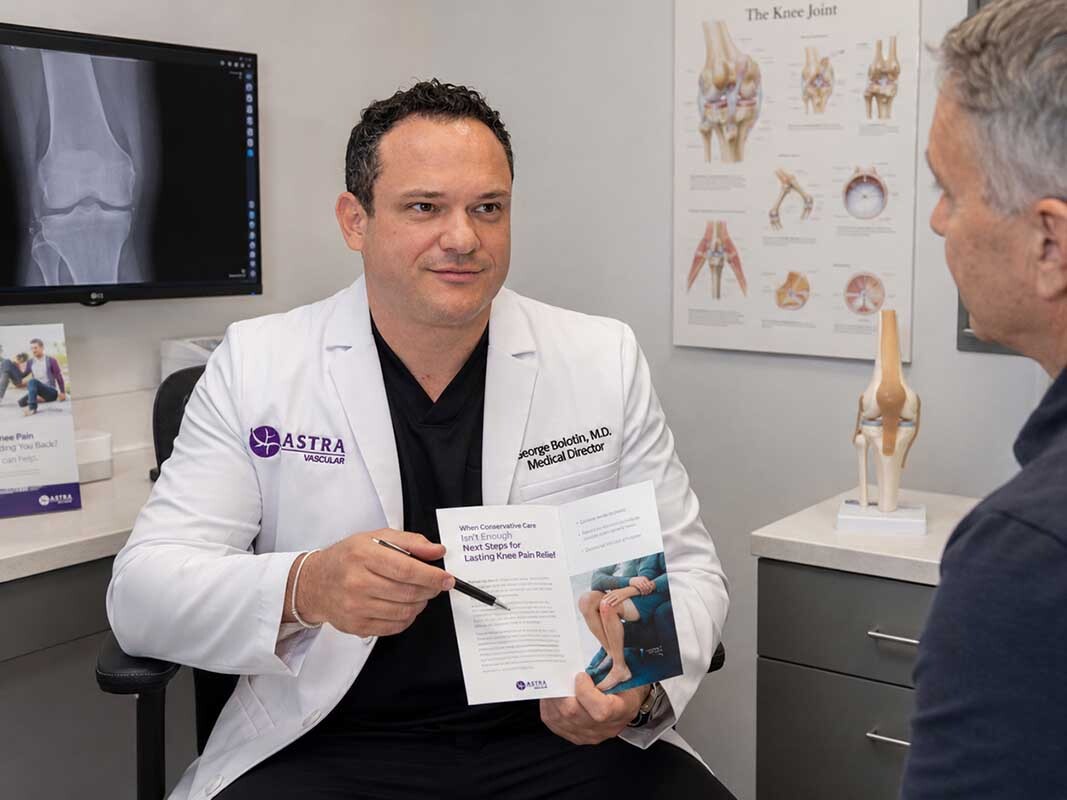
The best alternative to conservative treatments — one that may work so well that you avoid a knee replacement — is genicular artery embolization (GAE). GAE is a non-surgical procedure that blocks blood flow to the lining of the knee to effectively reduce inflammation. Contact the Astra Knee Pain Center today to see if this exciting new treatment is right for you.
Updated on Jul 8, 2026 by Dr. George Bolotin (Knee Pain Specialist) of Astra Knee Pain Center
Astra Knee Pain Center Brooklyn
4209 Ave U, Suite A.
Brooklyn, NY 11234
(347) 934-9068
Astra Knee Pain Center Bronx
869 E Tremont Ave
Bronx, NY 10460
(929) 447-4563
Astra Knee Pain Center Queens
30-71 Steinway St,
Astoria, NY 11103
(929) 486-2201