
Table of contents
If you are dealing with persistent knee pain and looking for a non-surgical treatment option in Brooklyn, Astra Knee Pain Center offers genicular artery embolization (GAE) for patients who may benefit from this minimally invasive procedure. GAE is designed to help reduce pain and improve mobility for people with knee osteoarthritis and other chronic knee conditions.
Genicular artery embolization (GAE) is an advanced medical procedure designed to reduce and even eliminate knee pain. It slows down the blood flow to small arteries in the knee joint called the genicular arteries. When these tissues become inflamed, they can create abnormal blood vessels that cause swelling and stiffness. The procedure blocks some of these abnormal vessels, which reduces inflammation and joint damage, in turn easing discomfort.
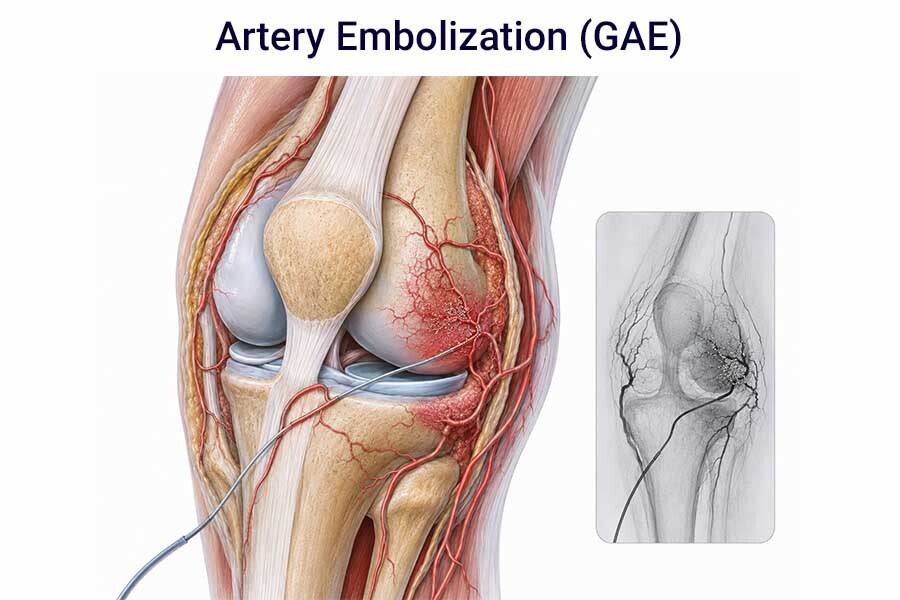
The results from GAE are promising when performed by experts in the field. Patients may experience significant pain reduction and better function for months to years from a simple outpatient procedure. Dr. George Bolotin at the Astra Knee Pain Center supports patients with resources to help them make an informed choice about whether this innovative treatment is right for their condition. You can learn if you qualify for GAE or why it may not be recommended based on specific health factors.
If you’ve been diagnosed with knee osteoarthritis, you’re likely dealing with symptoms that include stiffness, swelling and constant pain. This condition wears down the protective cartilage in your knee, which causes friction and inflammation. While GAE doesn’t rebuild cartilage, it reduces the inflammation that causes your pain.
GAE is also effective for treating other conditions, such as:
GAE is also an option when other conservative treatments don’t work. If you’ve already tried physical therapy, medications, steroid injections and lifestyle changes with little success, GAE could be your next step. Many people choose GAE in Brooklyn to delay or avoid knee replacement surgery altogether.
Local anesthesia is used to numb the area where the catheter is placed before your non-surgical knee pain treatment begins. This ensures you remain awake but comfortable throughout the process. Once the area is numb, your GAE doctor in Brooklyn makes a tiny incision to insert a catheter into one of your arteries.
When the catheter is correctly positioned near your inflamed genicular arteries, your doctor injects tiny embolization particles through the catheter. These particles block the abnormal blood flow that fuels inflammation in your knee joint.
Right after your procedure, the GAE recovery timeline begins and may include:
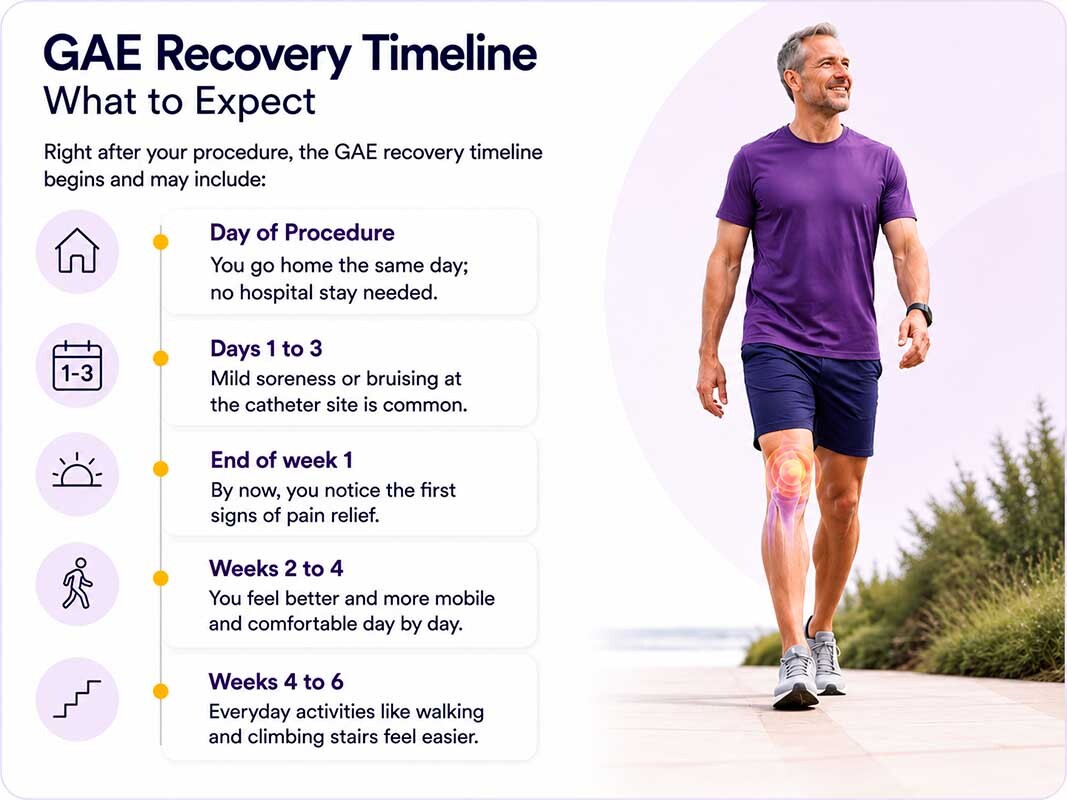
GAE has proven to be a safe and effective option. Clinical studies and patient outcomes show that long-term risks and side effects of GAE are rare. The tiny particles used during your procedure remain in place and are generally well-tolerated within your body. Reduced blood flow after GAE is both controlled and safe. The procedure specifically targets only the inflamed genicular arteries and leaves your healthy tissues unaffected.
In many cases, your surrounding tissues adjust without any issues. In very rare situations, if embolic particles move beyond the intended area, nearby tissues may be affected. This is extremely unlikely especially when your procedure is done by a skilled specialist in the Bronx.
You may notice a few short-term effects, but they usually go away quickly, and may include:
GAE gives you lasting relief from knee pain without needing invasive surgery, a long recovery or frequent injections. Knee replacement surgery is often considered the last resort for severe arthritis. GAE, on the other hand, is minimally invasive and doesn’t require cutting or replacing the joint.
Benefits of GAE vs. knee replacement include:
Physical therapy helps you move better and manage your knee pain, but it doesn’t directly target the inflamed blood vessels causing your discomfort.
Very often, when you stop doing the exercises to strengthen other parts of your legs, the pain returns, whereas GAE offers benefits that include:
Genicular artery embolization is being found to offer superior results compared to other, more traditional approaches to relieving knee pain.
And as an alternative to total knee replacement, its benefits outweigh other treatments, such as:
Here are practical steps to help you find a qualified specialist for this advanced treatment in your area:
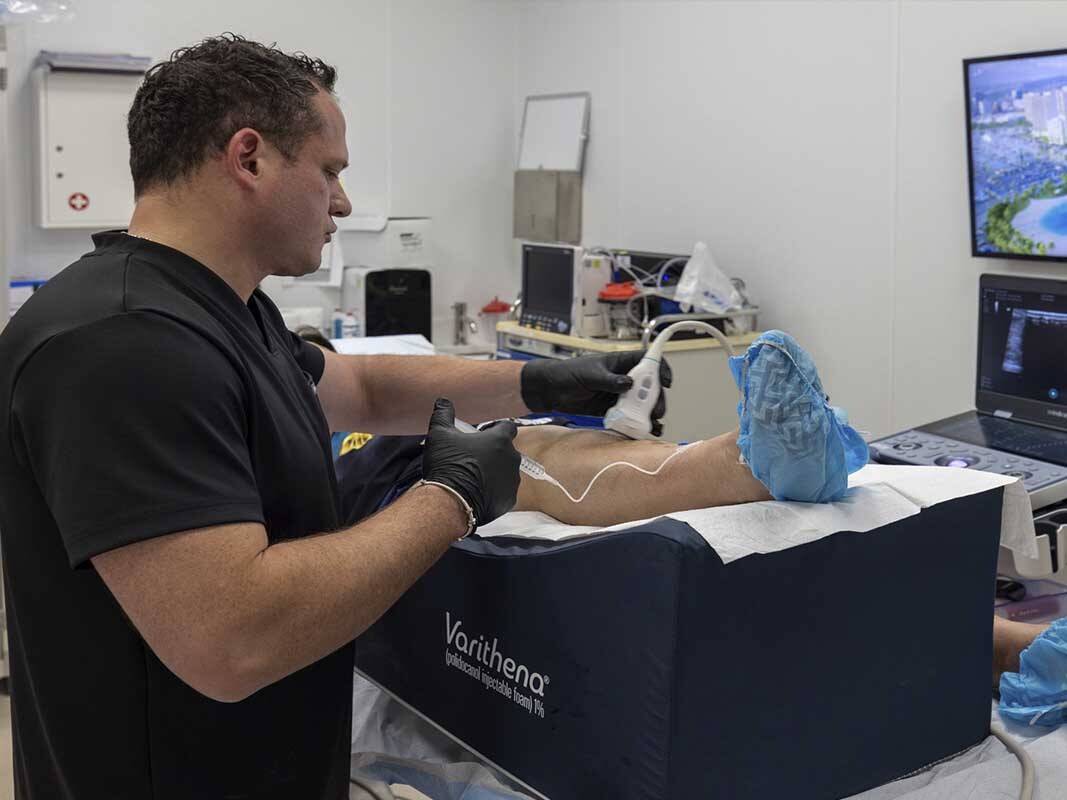
At Astra Knee Pain Center, our team of interventional radiologists, pain management doctors, and rehabilitation physicians specializes in advanced, minimally invasive treatments like genicular artery embolization. Using image-guided techniques, we target the source of inflammation in the knee to help reduce pain and improve mobility without the need for surgery.
GAE is still considered relatively new in the field of arthritis treatment. Your insurance coverage for GAE varies depending on your specific insurance plan. Some private insurance companies cover GAE if it’s deemed medically necessary, especially if you haven’t found relief through conservative treatments.
Medicaid or Medicare coverage for GAE may be available in certain cases but it’s often limited and subject to regional variations and individual evaluations. You’re required to meet strict criteria for coverage.
If your insurance plan doesn’t cover the full GAE cost, or only covers a portion of the procedure, you may have to pay out-of-pocket for expenses such as:
At the Astra Knee Pain Center, you have access to a team of experts who specialize in non-surgical knee pain treatments including GAE. Their board-certified interventional radiologists use the latest imaging and techniques to treat your knee pain precisely and safely without the need for invasive surgery.

Whether you’re exploring genicular artery embolization or need a second opinion regarding knee surgery, you receive clear answers and personalized care. Contact the Astra Knee Pain Center today to discuss your knee health and non-surgical treatment options with an experienced GAE specialist in Brooklyn.
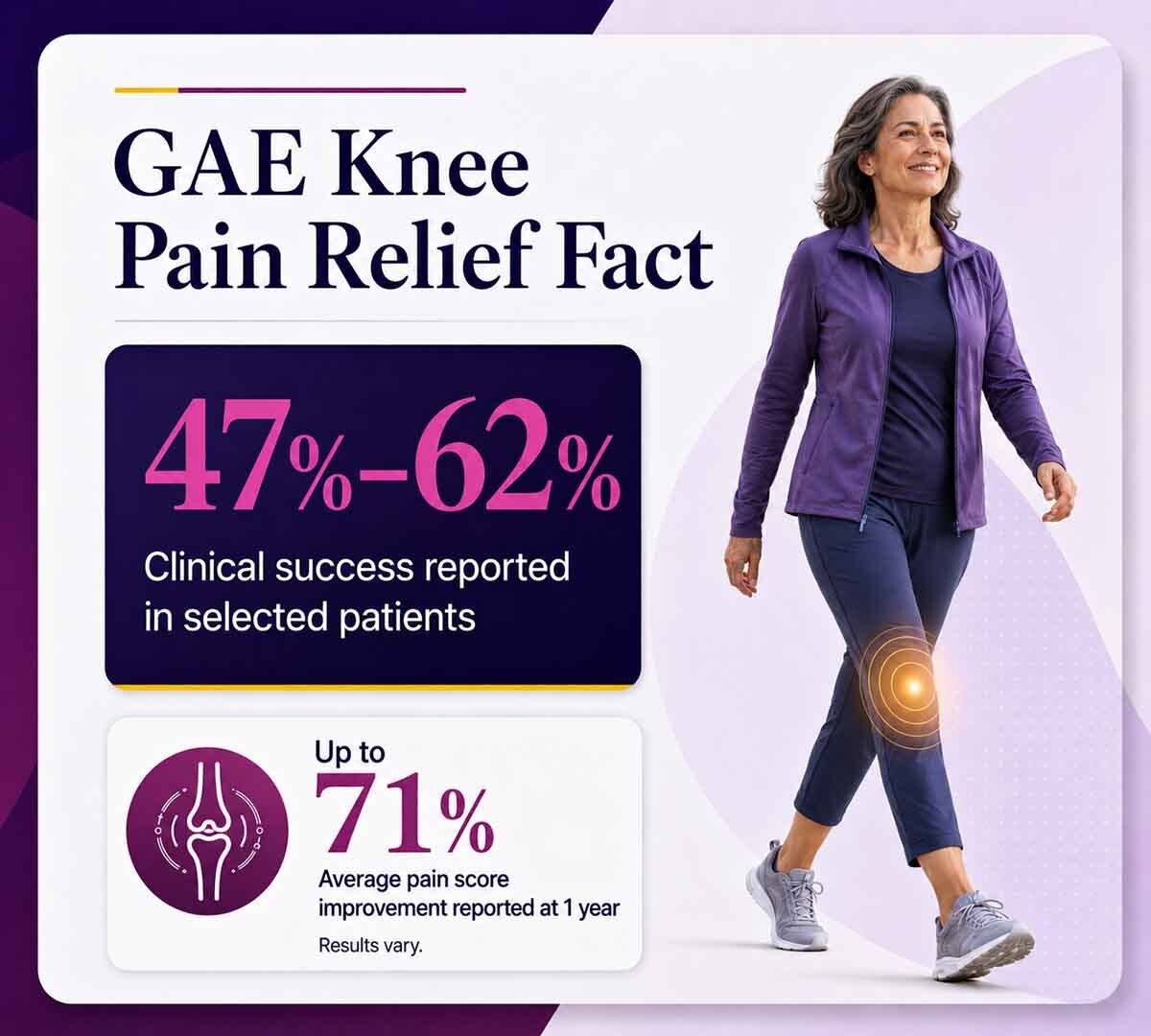
Genicular artery embolization (GAE) has shown promising results for many patients with knee osteoarthritis who continue to experience pain despite conservative treatments. By reducing inflammation associated with abnormal blood vessels around the knee, GAE may help decrease pain and improve daily function. Individual outcomes vary depending on the severity of osteoarthritis, overall health, and other patient-specific factors. A consultation is the best way to determine whether GAE may be an appropriate treatment option for you.
For some patients, GAE may help manage knee pain and improve mobility, potentially allowing them to postpone knee replacement surgery. While the procedure does not reverse osteoarthritis or eliminate the need for surgery in every case, it may provide meaningful symptom relief for patients seeking a minimally invasive alternative. Your physician can discuss whether GAE aligns with your long-term treatment goals.
The duration of symptom relief varies from patient to patient. Many individuals experience improvement for months or even longer, although results depend on factors such as the severity of osteoarthritis, activity level, and overall joint health. Regular follow-up appointments help monitor your progress and determine whether any additional treatment is needed.
Genicular artery embolization should be performed by physicians with experience in minimally invasive image-guided procedures. At Astra Knee Pain Center in Brooklyn, patients receive a comprehensive evaluation to determine whether GAE is appropriate for their condition before a personalized treatment plan is developed.
Astra Knee Pain Center Brooklyn
4209 Ave U, Suite A.
Brooklyn, NY 11234
(347) 934-9068
Astra Knee Pain Center Bronx
869 E Tremont Ave
Bronx, NY 10460
(929) 447-4563
Astra Knee Pain Center Queens
30-71 Steinway St,
Astoria, NY 11103
(929) 486-2201