
GAE doctors in Brooklyn and the Bronx at the Astra Knee Pain Center offer a remarkable new treatment for chronic knee pain conditions called genicular artery embolization or GAE. Your knee pain specialist determines if you’re a good candidate for GAE and explains how it’s often superior to neuromodulation devices. When it comes to GAE vs. neuromodulation devices, if you qualify, you’ll be amazed at the results of GAE vs. TENS and other non-surgical treatments.
What’s the Main Difference Between GAE vs. Neuromodulation Devices?
Genicular artery embolization (GAE) involves the intravenous blockage of blood flow to an affected nerve, while neuromodulation devices use electrical pulses to alter pain signals through the nervous system. Though both non-surgical treatments can provide relief to a variety of knee pain conditions, weighing side effects and benefits of each can narrow down which option is right for you.
A neuromodulation device called a transcutaneous electrical nerve stimulator (TENS) is sometimes used to alleviate joint pain. A TENS device emits high frequencies of short, intense electrical pulses to the affected joint. Currents are administered through electrodes placed on the skin. These quick fix machines provide rapid relief for mild pain. GAE is geared more toward a targeted, more permanent solution.
If you’ve been suffering from chronic knee pain, knee pain specialists at Astra Knee Pain Center explain the differences between GAE vs. TENS. Dr. George Bolotin and his team are top-rated knee pain doctors in Brooklyn and the Bronx who quickly evaluate you for treatment.
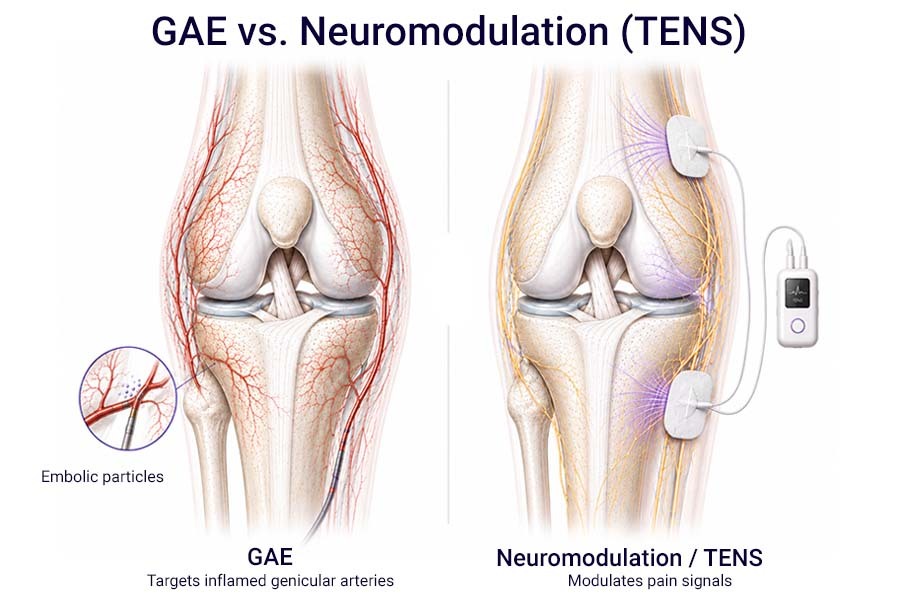
What Are the Side Effects of GAE vs. TENS?
Because TENS treats a broader surface area, side effects range from large skin rashes to tingling or numbing in non-targeted places. Leading knee pain specialists at Astra Knee Pain Center offer information on all possible treatment reactions.
Some negative side effects of TENS include:
- Allergic reaction.Electrode pads are attached with a strong adhesive that may cause severe skin irritation or unexpected allergic reactions.
- Temporary relief.Though TENS treatment can numb pain for a brief period, it acts as a pause button; it doesn’t eliminate it permanently.
- Mild electrical burns.Some experience a negative reaction to the electrodes in the form of mild burns. The intensity of electrical charge should be calibrated properly before use.
- Lingering uncomfortable sensations.Electric pulses from TENS can sometimes leave you with an uncomfortable tingling or muscle spasm around the treated area.
When comparing GAE vs. TENS, your doctor considers the complexity of your knee pain symptoms and their corresponding causes. Risks and side effects of GAE are normally minor, involving temporary bruising and tenderness. Complications from TENS can be significant if used improperly and may outweigh any short-term relief it provides.
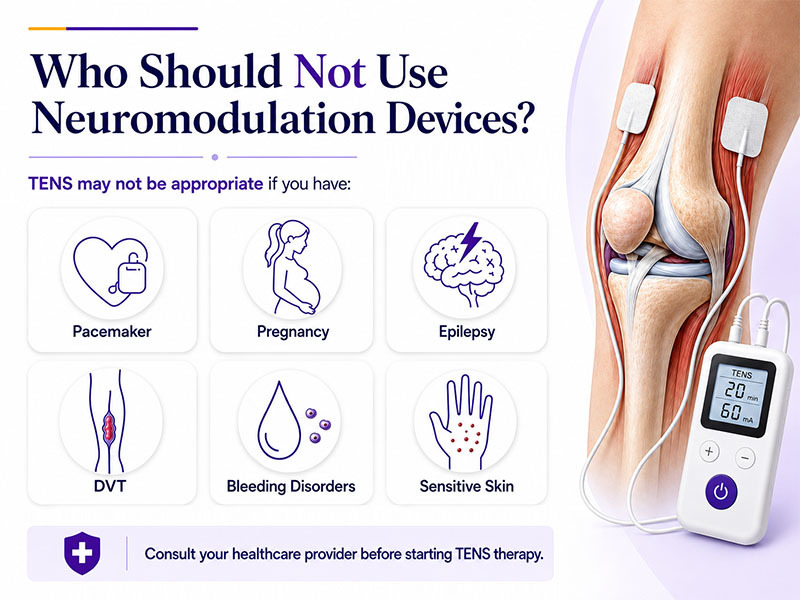
Who Should Not Use Neuromodulation Devices?
Devices that shock nerve pain can be effective for qualified candidates but are not fit for everyone. Altering nerve function can have extreme consequences if you have a serious illness or have existing metal implants.
You shouldn’t receive TENS or any neuromodulation device if you:
- Have a serious health condition.If you’ve been diagnosed with cancer, epilepsy, heart disease, deep vein thrombosis (DVT) or a bleeding disorder, you should not use TENS.
- Are pregnant.Neuromodulation devices aren’t recommended for pregnant mothers as they could be damaging to mother and baby.
- Use a pacemaker.Electrical impulses can counteract the necessary function of a pacemaker, defibrillator or other implantable devices.
- Have sensitive skin. The strong adhesive used to attach device nodes can sometimes cause redness, swelling and severe allergic reactions to surrounding skin.
Neuromodulation devices can be dangerous to self-treatment without first talking to your doctor. Consider Dr. Bolotin, a leading knee pain specialist in Brooklyn, when looking for a second opinion for knee pain treatment when you want to avoid knee replacement, and to see if you qualify for GAE.
Why Choose GAE vs. TENS?
A GAE procedure can provide long-term relief of chronic knee pain, while TENS treatment focuses on specific, short-term pain management. Conditions like osteoarthritis, meniscus tears and patellofemoral syndrome cause recurring pain that’s more effectively treated with GAE. A more permanent embolism can also eliminate the need for repetitive TENS treatment and pain medication.
If you’re experiencing persistent swelling and stiffness, instability and joint locking, and have gone through rounds of failed conservative therapy, it’s good to know that knee replacement surgery is not your only option. Pain caused by inflammation and joint damage requires specific attention to zero-in on its cause.
Consider GAE vs. TENS for knee pain if you’re looking for:
- Targeted treatment.GAE blocks blood flow to the specific nerve causing pain, as opposed to numbing a larger area of the body unnecessarily.
- Long term relief. Relief from GAE has been known to last for much longer than that of a neuromodulation device. On average those who undergo GAE experience several months to years of relief.
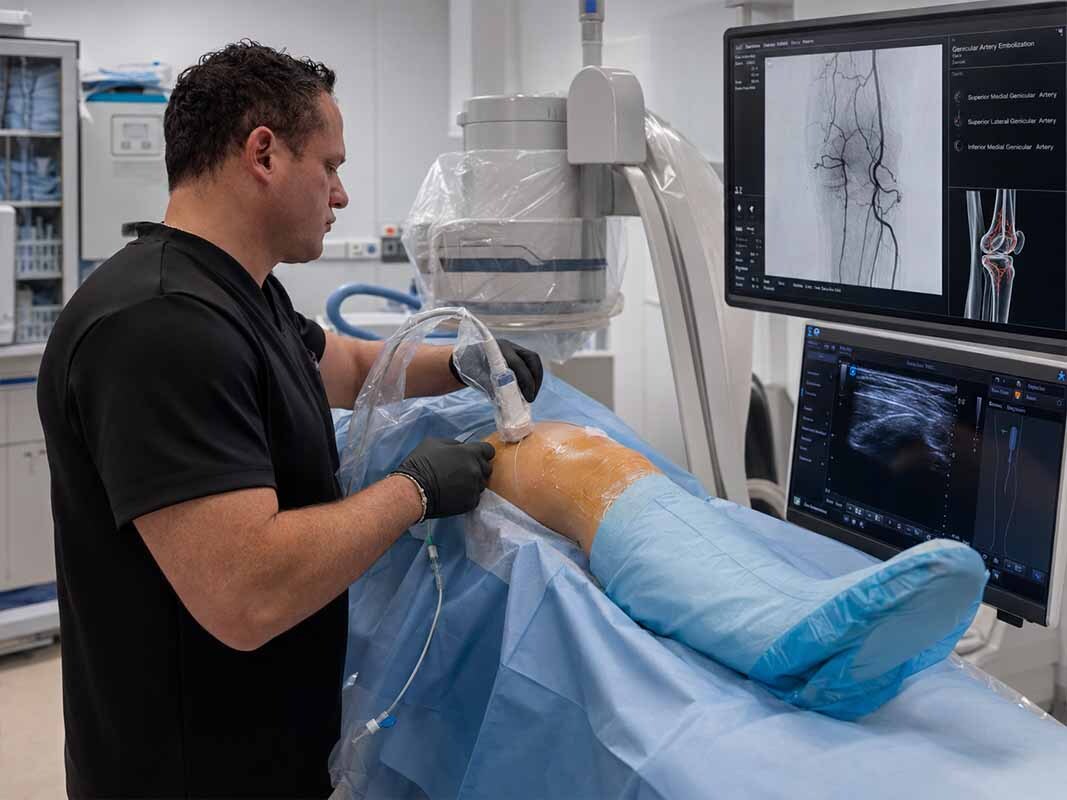
- A minimally invasive procedure. GAE is an outpatient procedure that takes between one to three hours. A catheter is inserted through a small incision, making it a lower risk for complications or infection.
- De-emphasis on pain meds. The longer-term relief GAE provides diminishes the need for addictive and expensive pain medications.
If you live in New York and are looking for a knee pain doctor in Brooklyn or the Bronx, contact Dr. Bolotin at the Astra Knee Pain Center. Here you can expect quality treatment and expert guidance on GAE vs. neuromodulation devices from experienced knee pain doctors and interventional radiologists.
Updated on Jun 30, 2026 by Dr. George Bolotin (Knee Pain Specialist) of Astra Knee Pain Center
Astra Knee Pain Center Brooklyn
4209 Ave U, Suite A.
Brooklyn, NY 11234
(347) 934-9068
Astra Knee Pain Center Bronx
869 E Tremont Ave
Bronx, NY 10460
(929) 447-4563
Astra Knee Pain Center Queens
30-71 Steinway St,
Astoria, NY 11103
(929) 486-2201